Life in Germany · Life & culture
When the frost comes, the north eats Grünkohl — and walks for it on a Kohlfahrt
When "Grünkohl" is on the menu, winter has begun
As November approaches, the chalkboards outside pubs in Hamburg, Bremen and Hanover start showing the same word: Grünkohl, curly kale. Not the raw kale of salad bowls, but a dark green dish, chopped and slowly cooked for hours with fat and onions. For northern Germans it means: now it's really winter.
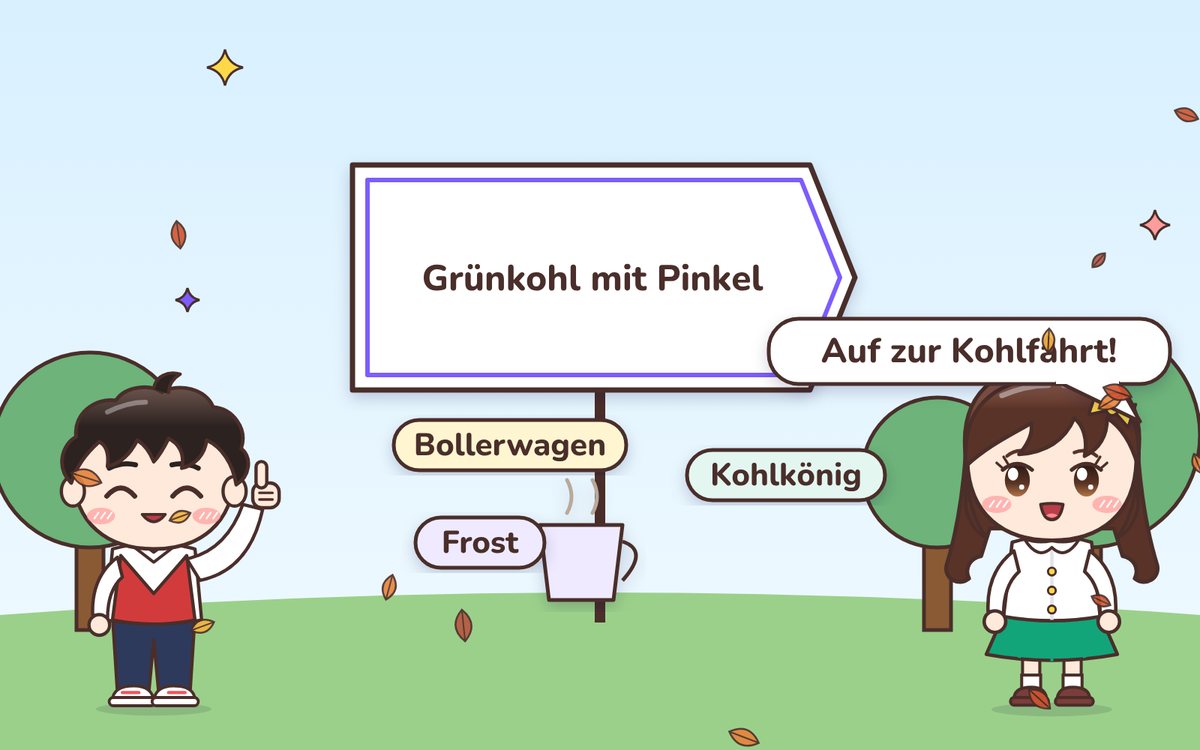
Why wait for the frost?
Traditionally, Grünkohl is harvested after the first frost. The cold is said to take away the bitterness and make it milder. Modern varieties can be picked as early as September, but many people still swear that frosted kale tastes best. So the season usually starts around November and runs into February or March.
What's on the plate
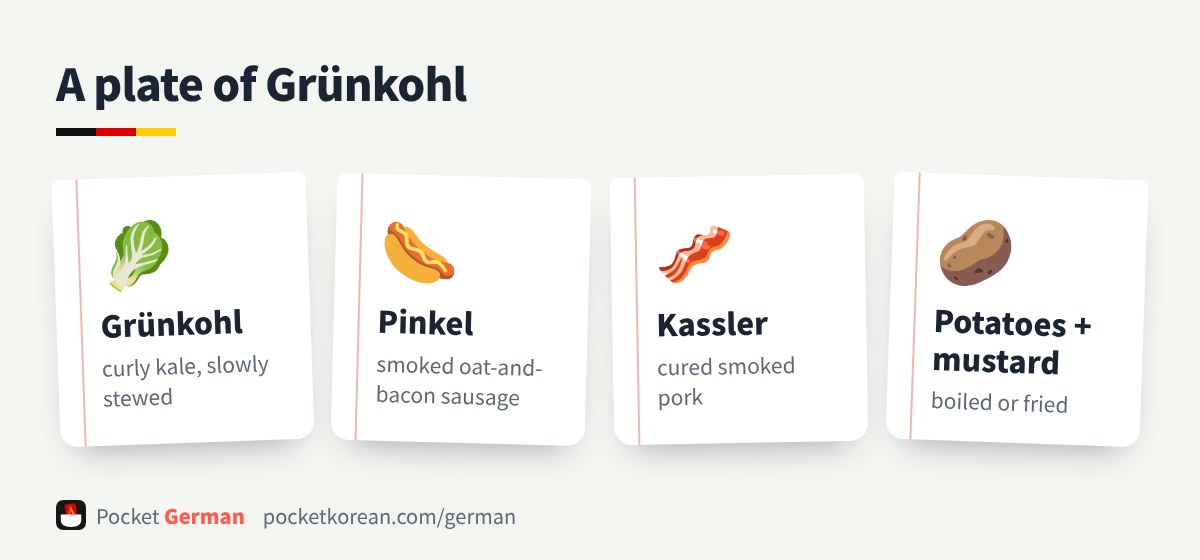
Grünkohl never comes alone. Its partners change a little from region to region.
| On the side | What is it? | Where is it typical? |
|---|---|---|
| Pinkel | smoked sausage made with oats, bacon and onions | Bremen, Oldenburg |
| Kassler | cured, smoked pork | across the north |
| Kohlwurst, Bregenwurst | sausages cooked with the kale | Lower Saxony, Westphalia |
| Potatoes | boiled or fried | depends on the region |
| Senf (mustard) | cuts through the saltiness | everywhere |
Many restaurants now also serve a vegetarian version with smoked tofu or vegan sausage. In supermarkets you'll easily find Grünkohl in jars or frozen.
The Kohlfahrt: walk, play, eat
The real fun in the north is the Kohlfahrt (in some places Kohltour). Colleagues, clubs or groups of friends meet on a winter weekend and walk for a few hours through the countryside. Drinks and snacks travel in a Bollerwagen, a handcart. On the way they play games such as Boßeln, rolling a ball as far as possible along the road, and finally they arrive at a booked village inn to eat Grünkohl together.
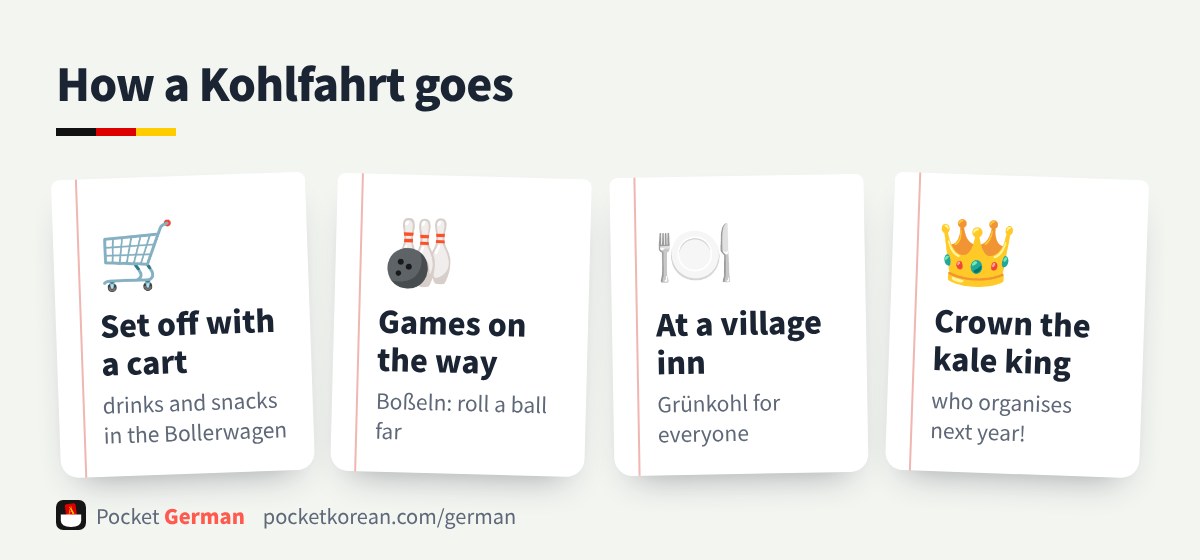
After the meal, the group crowns its Kohlkönig, the "kale king". Some groups use the game scores, others pick whoever ate the most. The king usually gets the job of organising next year's Kohlfahrt. The custom is said to have started in the Oldenburg area in the 19th century. On popular Saturdays in January and February, inns are booked out weeks ahead.
Invited for the first time?
| ✅ Do | ❌ Don't |
|---|---|
| Wear waterproof shoes, warm layers and a hat | Come in new trainers and a thin coat |
| Use a hi-vis vest or a torch after dark | Walk as a crowd in the middle of the road |
| Join in the games | Say "I'll just watch" |
| Drink at your own pace, with water or tea too | Accept every drink you're offered |
| Mention vegetarian meals when booking | Ask the inn on the day |
Kohlfahrten are rare in Berlin and the south, but if you have colleagues from the north, you may well get invited one winter. Then just say "Ja, gerne!"
Today's German words
| Word | Meaning |
|---|---|
| der Grünkohl | curly kale, stewed kale |
| die Kohlfahrt | winter outing to eat kale |
| der Bollerwagen | handcart |
| der Frost | frost |
| der Kohlkönig / die Kohlkönigin | kale king / kale queen |
| deftig | hearty, rich (food) |
A steaming plate of Grünkohl on a cold day — give it a try this winter. Guten Appetit! 🥬