Life in Germany · Life & culture
Lanterns on November evenings — St Martin's Day in Germany
When it gets dark early, the lanterns come out
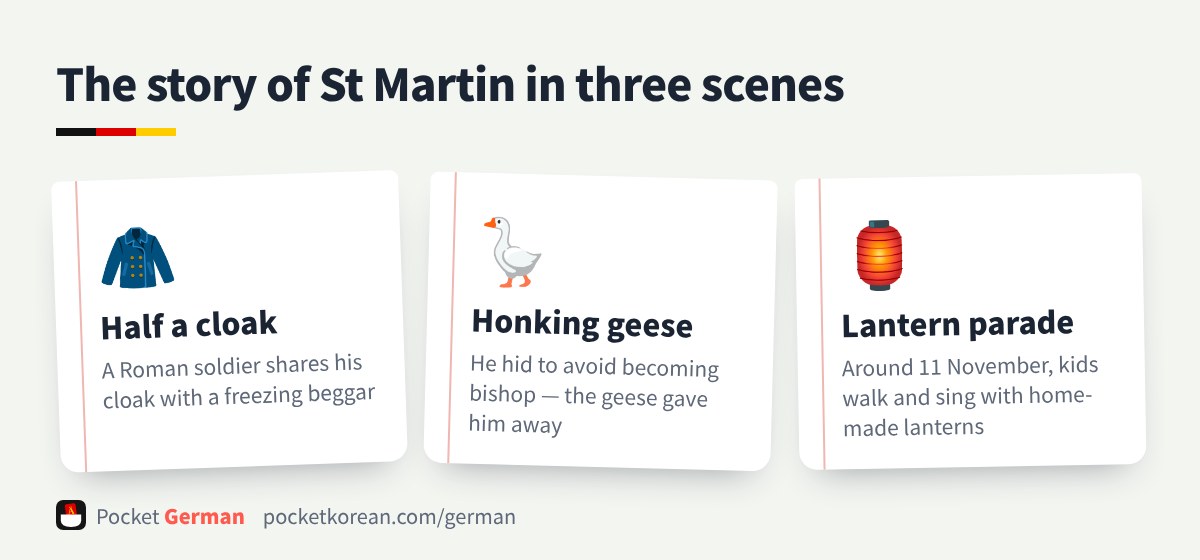
Once the clocks go back this Sunday, it's nearly dark by 5 pm. That's when German kindergartens (Kitas) and primary schools start making Laternen — paper lanterns — with glue and tissue paper. They are for the Laternenumzug, the lantern parade held around Martinstag, St Martin's Day, on 11 November. It isn't a public holiday, but for families with small children it's one of the best evenings of the year. This year, 11 November falls on a Wednesday.
The soldier who cut his cloak in half
The hero is Martin of Tours, who lived in the 4th century. As the story goes, he was a Roman soldier who met a freezing beggar on a cold day, cut his own cloak in two with his sword and gave him half. Martin later became bishop of Tours in France and died in November 397 — which is why 11 November is his day. That's why many parades are led by a "Martin" on horseback in a red cloak, sometimes with a "beggar" walking next to him.
Honking geese — and roast goose
There's a second legend: Martin didn't want to become bishop and hid in a goose pen, but the honking geese gave him away. So around now, German restaurant menus feature Martinsgans — roast goose with red cabbage and dumplings. In the past, 11 November was also the day rent was due (sometimes paid in geese), and the last big feast before the old fasting period leading up to Christmas.
How a parade goes
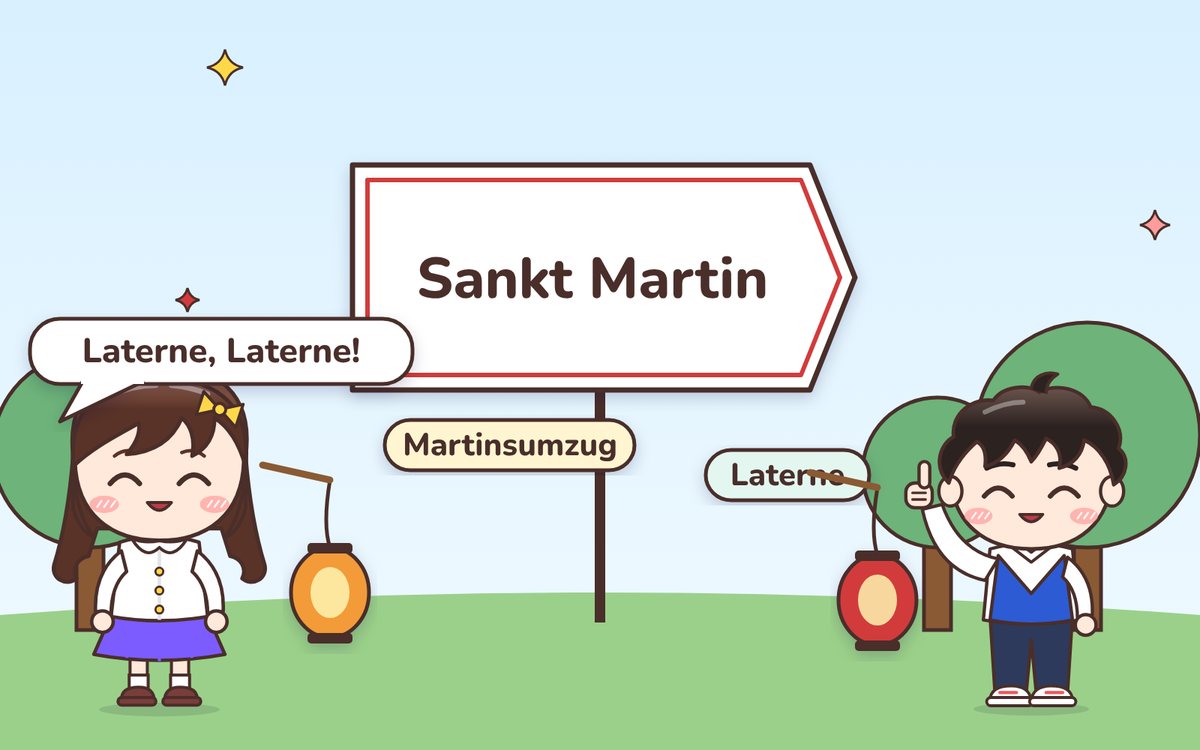
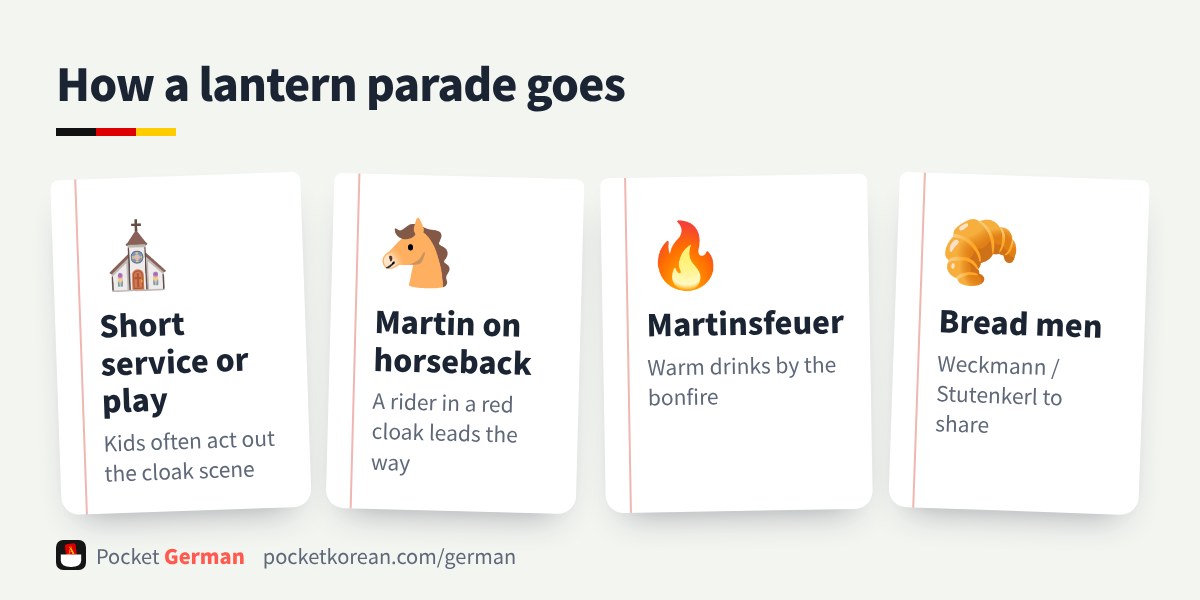
People usually gather at dusk outside a church or Kita for a short service or a little play of the cloak scene. Then the children follow Martin's horse with their lanterns, singing songs like "Ich geh mit meiner Laterne" and "Laterne, Laterne, Sonne, Mond und Sterne", often with a brass band. Afterwards there's a Martinsfeuer (bonfire), warm punch, and a Weckmann (also called Stutenkerl): a sweet bread man with raisin eyes and a little clay pipe. The pipe is said to stand for the bishop's staff, not for smoking.
| Going for the first time? | Tips |
|---|---|
| When and where? | Check notices at Kitas, schools and churches — parades are spread over several days in early to mid November |
| Lantern | Make one or buy a kit; many families now use a battery-powered light stick |
| Clothes | It gets cold after sunset — gloves and a hat |
| Songs | Print the lyrics so you can sing along |
| No kids? | Most local parades are open to anyone watching. Streets may close briefly, so drive carefully |
It varies by region
In the Rhineland, Martinssingen is especially popular: children go from door to door or shop to shop with their lanterns, sing, and get sweets. In Protestant areas, 11 November is also the day Martin Luther was baptised (1483), and some places hand out "Luther rolls" instead of bread men. And on the same day at 11:11, the carnival season starts in Cologne, Düsseldorf and Mainz — quiet lanterns in one street, costumed crowds cheering in another, all on the same date.
Today's German words
| Word | Meaning |
|---|---|
| die Laterne | lantern |
| der Laternenumzug | lantern parade |
| der Mantel | cloak, coat |
| teilen | to share |
| die Martinsgans | St Martin's goose (roast) |
| der Weckmann | bread man (with a pipe) |
If you meet a lantern parade in your street, stop for a minute and listen. November in Germany suddenly feels a little warmer. 🏮🪿