Life in Germany · Life & culture
Christmas in the supermarket in October? A guide to Lebkuchen, Spekulatius and Stollen
Lebkuchen on a T-shirt day
Your first year in Germany comes with a surprise. In early September, when it's still warm enough for T-shirts, a corner of the supermarket fills up with boxes that smell of cinnamon: Lebkuchen, Spekulatius, Dominosteine — Christmas sweets. Germans grumble "already?" every year, and then quietly drop a bag into the trolley.
Why so early?
The factories do Christmas in summer. According to German press reports, the big Lebkuchen bakers are busiest from June to August, and the first products reach the shelves at the end of August. The retail trade association simply says: there is demand. Sales in September and October are said to be similar to November and December. Yet in a 2021 YouGov survey, about two in three Germans said they'd prefer Christmas sweets to go on sale only from November. Plenty of buyers, plenty of complainers. Some papers jokingly call it "Herbstgebäck" — autumn baking.
Five winter classics
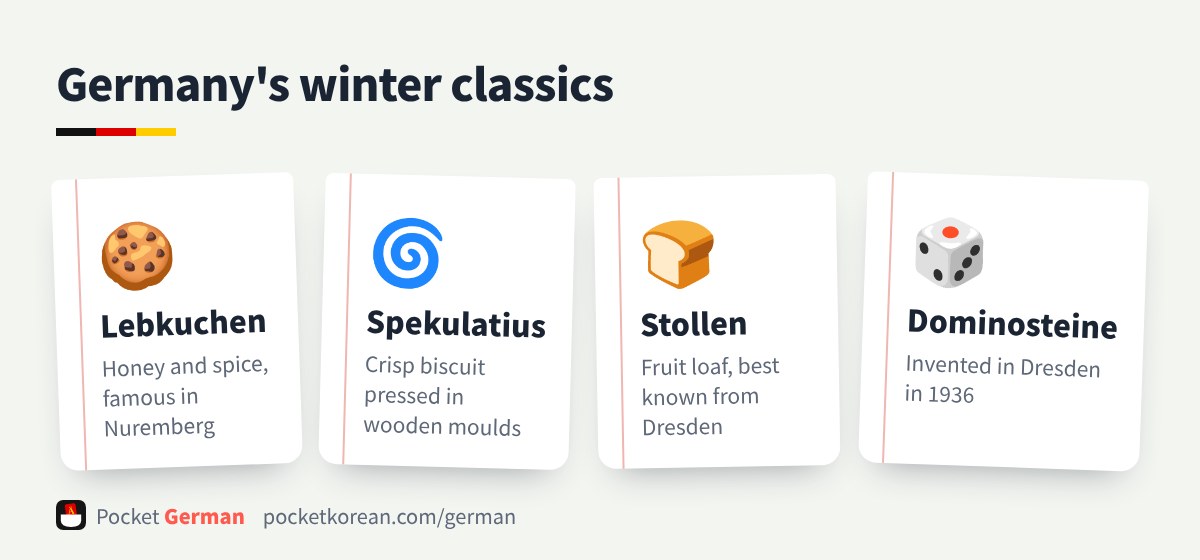
| Sweet | What it's like | The story |
|---|---|---|
| Lebkuchen | soft biscuit with honey, spices and nuts | Nuremberg's are the most famous |
| Spekulatius | thin, crunchy spiced biscuit | from the Netherlands and Belgium; in Germany made mostly in the Rhineland and Westphalia |
| Stollen | heavy fruit loaf under a coat of icing sugar | Dresden's is the best known |
| Dominosteine | bite-sized layers of Lebkuchen, fruit jelly and marzipan, coated in chocolate | first made in Dresden in 1936 |
| Pfeffernüsse | small round spiced biscuits | despite the name, little or no pepper |
A city name on the pack means protection
Look at the pack. Nürnberger Lebkuchen has EU protected geographical indication (g.g.A. in German), so only Lebkuchen made in the city of Nuremberg may carry that name. The same goes for Aachener Printen, Dresdner Stollen and Lübecker Marzipan. The premium Elisenlebkuchen, by German food guidelines, must contain at least 25% nuts and at most 10% flour — which is why it is so moist and nutty.
Stories in the names
The pictures on Spekulatius come from the story of St Nicholas (6 December), patron saint of sailors: ships, horses and the like, pressed into the dough with carved wooden moulds (Model), so the motifs are in mirror image. The "Pfeffer" in Pfeffernüsse was a medieval word for exotic spices in general. And Dominosteine were created in 1936 by Dresden chocolatier Herbert Wendler as an affordable treat.
When are you "supposed" to eat them?
Officially: in Advent. This year the first Sunday of Advent is 29 November, and the Christmas markets open around then.
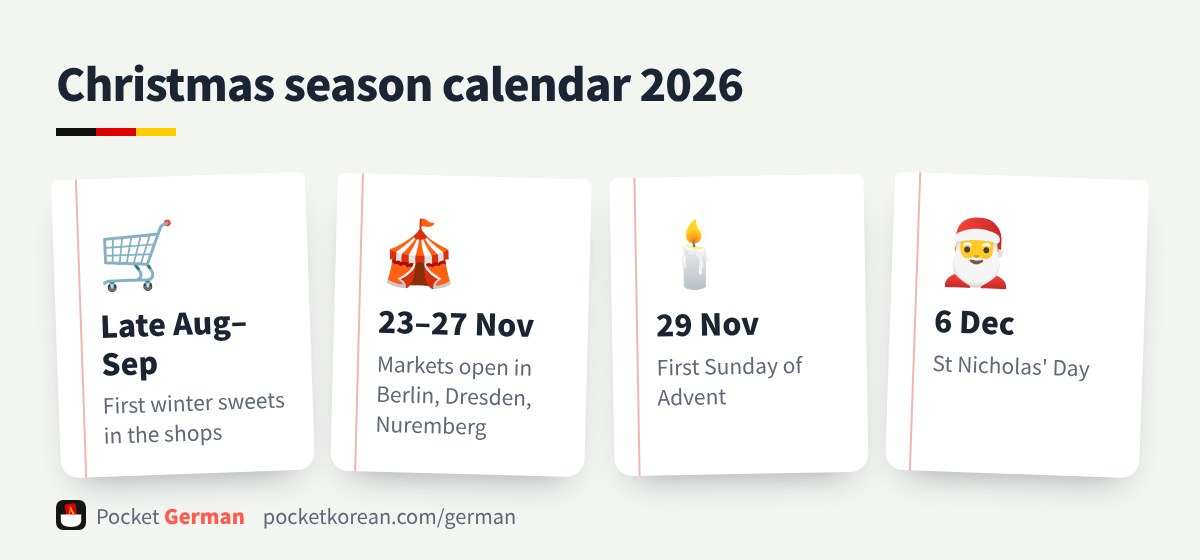
| When | What |
|---|---|
| late August–September | first winter sweets in the shops |
| 23 November | Berlin's Gendarmenmarkt Christmas market opens |
| 25 November | Dresden's Striezelmarkt opens |
| 27 November | Nuremberg's Christkindlesmarkt opens |
| 29 November | first Sunday of Advent |
| 6 December | St Nicholas' Day |
Nobody will stop you from eating them in autumn. But try saying "Schon Lebkuchen im Oktober?" to a German friend — you'll get a laugh.
Today's German words
| Word | Meaning |
|---|---|
| der Lebkuchen | Lebkuchen, spiced honey biscuit |
| der Spekulatius | spiced shortcrust biscuit |
| der Stollen | Stollen, Christmas fruit loaf |
| das Weihnachtsgebäck | Christmas baking, Christmas sweets |
| der Advent | Advent |
| der Weihnachtsmarkt | Christmas market |
Enjoy your first Lebkuchen of the season with a hot cup of tea. Guten Appetit! 🍪