Life in Germany · Life & culture
Empty bottles are money — Pfand in Germany: 25 cents vs 8 cents
The mysterious 25 cents on your receipt
You buy one bottle of water at a German supermarket, and the receipt has an extra line: Pfand 0,25. That's a deposit (das Pfand) on the bottle. Bring the empty bottle or can back to a shop and you get exactly that money back. That's why almost every German home has a bag or box of empties on the balcony or in a corner of the kitchen. These empties are called Leergut (das Leergut).
Single-use 25 cents, reusable 8–15 cents
There are two main kinds of Pfand.
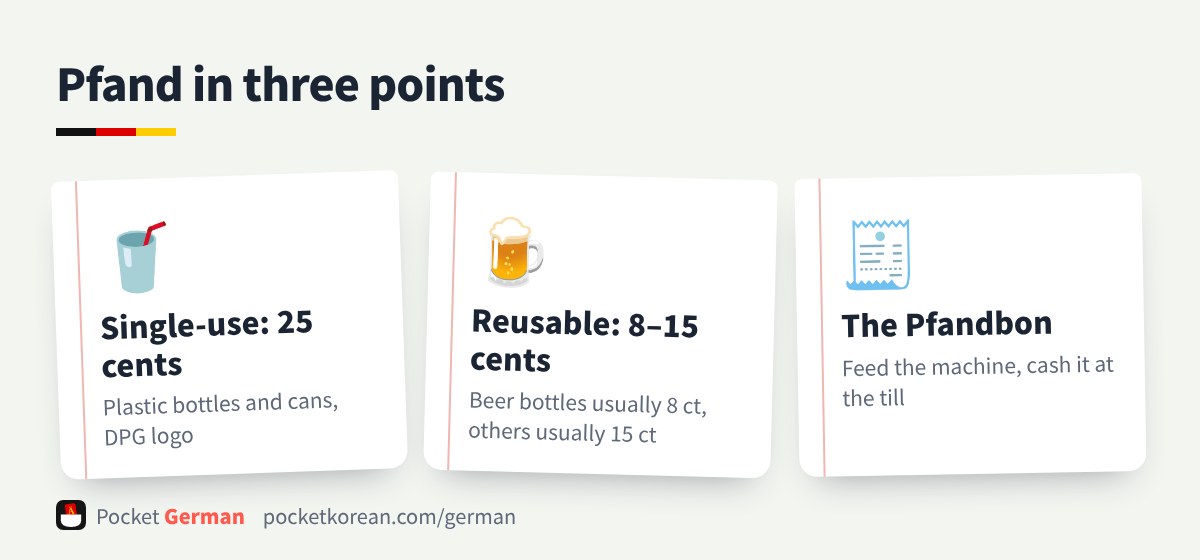
- Single-use (Einweg) — most plastic (PET) bottles and cans. From 0.1 to 3 litres it is always 25 cents. Returned bottles are melted down and recycled.
- Reusable (Mehrweg) — glass bottles and thick plastic bottles that are washed and refilled. Beer bottles are usually 8 cents; water, soft drink and juice bottles usually 15 cents. Reusable deposits are set by the industry, not by law, so some cost more — swing-top bottles, for example.
Since 2022 all single-use plastic bottles and cans carry a deposit, including juice and canned wine, and since 2024 milk drinks in plastic bottles do too. On the other hand, cartons (Tetrapak), pouches, and wine, sparkling wine and spirits in glass bottles have no Pfand. Those just go into the normal recycling.
Tell them apart by the logo
Single-use bottles and cans have the DPG logo, with an arrow wrapped around a bottle and a can. Reusable bottles have no single official logo; look for a "Mehrweg" mark or words like "Mehrwegflasche" or "Leihflasche". Shelf price labels must also say EINWEG or MEHRWEG. Don't be fooled by "PET-Cycle": it's only a recycling mark and does not mean the bottle is reusable.
| Single-use (Einweg) | Reusable (Mehrweg) | |
|---|---|---|
| Pfand | 25 cents | beer bottles usually 8 cents, others usually 15 cents |
| Marking | DPG logo + barcode | "Mehrweg" mark, no single official logo |
| After return | melted down and recycled | washed and refilled |
| Who takes it back? | every shop that sells the same material (shops under 200 m² only the brands they sell) | no legal duty, but shops selling that bottle usually take it |
Into the machine, out comes a receipt
Near the entrance of big supermarkets you'll find a deposit machine (der Pfandautomat). Put the bottles in one by one, bottom first, and the machine reads the barcode. When you're done, press the button and out comes a deposit receipt (der Pfandbon). Hand it in at the checkout and the amount is taken off your bill or paid out in cash. The receipt usually only works in that branch. You can get single-use Pfand back without buying anything, and a shop has to take bottles bought elsewhere as long as it sells the same material (plastic, cans, glass). Slightly crushed cans must be accepted too if the logo can be read — if the machine refuses them, ask the staff to take them by hand. In some places you can feed a crate of beer into the machine as a whole crate (der Kasten). The empty crate has a deposit as well.
Pfand goes next to the bin
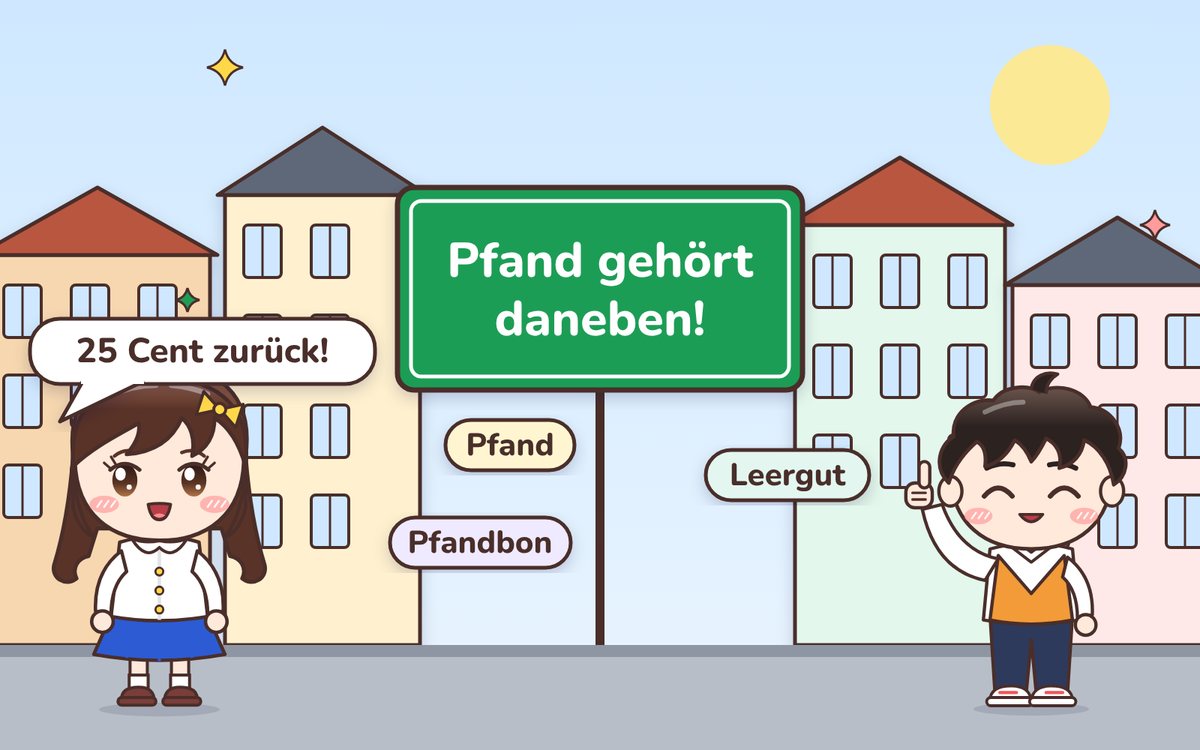
Walking through town, you'll see empty bottles neatly lined up next to public bins. They weren't thrown away — they were put there on purpose. Around 2011 a campaign started in Berlin called "Pfand gehört daneben" (Pfand belongs next to it): leave bottles beside the bin so that people who collect them to top up their income don't have to dig through the rubbish. If you don't want to carry a bottle around, stand it gently next to the bin rather than inside it.
Today's German words
| Word | Meaning |
|---|---|
| das Pfand | deposit |
| das Leergut | empties (containers to return) |
| die Einwegflasche | single-use bottle |
| die Mehrwegflasche | reusable bottle |
| der Pfandautomat | deposit machine |
| der Pfandbon | deposit receipt |
How about clearing out that corner of empties in your kitchen this weekend? Pfand gehört daneben! ♻️