Life in Germany · Life & culture
November, Germany's quiet month — from All Saints' to Totensonntag
The day after Halloween, candles light up the cemeteries
On the night of 31 October, children go door to door shouting "Süßes oder Saures!" for sweets. Then the mood changes. The sun sets around half past four, and the calendar fills with quiet days (stille Tage). November is the month when Germans remember those who have died. In your first German November there will surely be a day when you wonder why everything feels so hushed.
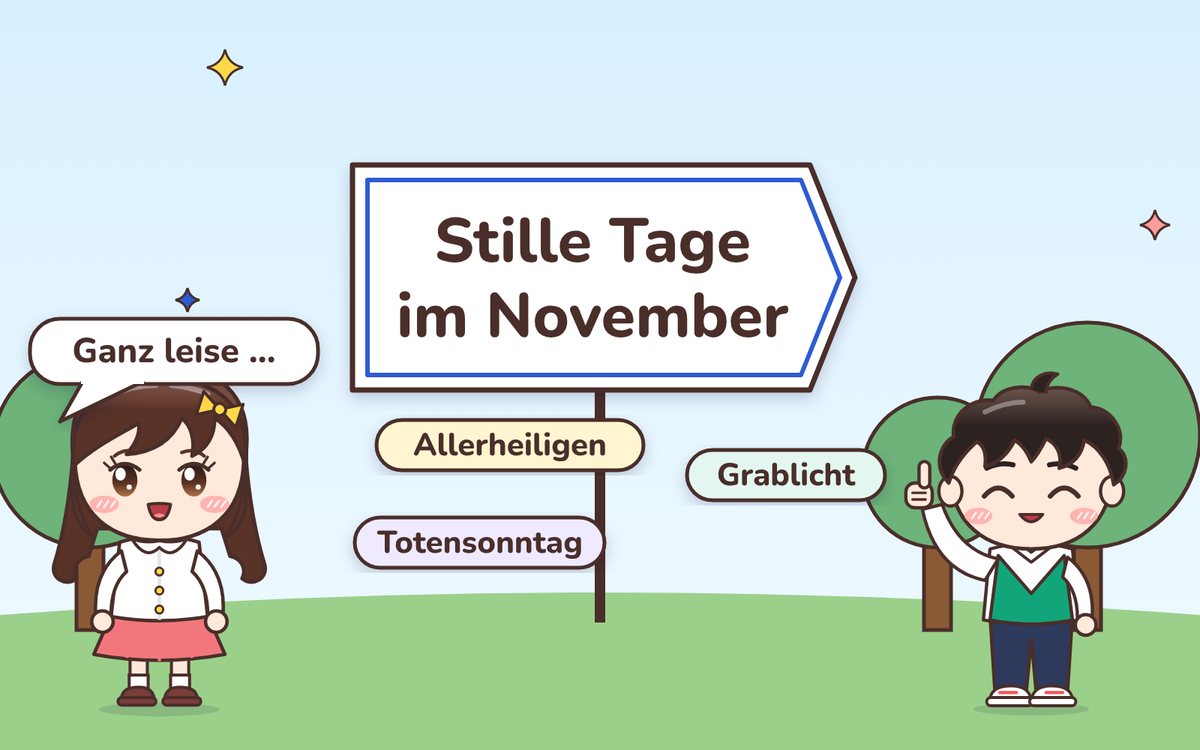
1–2 November: All Saints' and All Souls'
All Saints' Day (Allerheiligen, 1 November) is a Catholic feast for all the saints. It's a public holiday in five states — Bavaria, Baden-Württemberg, North Rhine-Westphalia, Rhineland-Palatinate and Saarland — so shops there are closed. This year it falls on a Sunday, so you'll notice it less. The next day, All Souls' Day (Allerseelen, 2 November), is not a holiday, but around this time many families visit cemeteries, tidy the graves and light red grave candles (Grablichter). At dusk, a cemetery full of tiny lights is a beautiful sight.
15 November: the national day of mourning
Volkstrauertag falls on the Sunday two weeks before the first Sunday of Advent — this year 15 November. It began after the First World War and today remembers the victims of war and tyranny of all nations. There's a ceremony in the Bundestag, and towns lay wreaths at their war memorials. Flags on public buildings may fly at half-mast.
18 November: a holiday only Saxony kept
The Day of Repentance and Prayer (Buß- und Bettag) is a Protestant day, this year on Wednesday 18 November. It used to be a nationwide holiday, but in 1995 most states scrapped it to help pay for the new long-term care insurance (Pflegeversicherung). Today it's a public holiday only in Saxony — and in return, employees in Saxony pay a slightly larger share of the care insurance contribution. In some other states schools may close for the day, so parents should check with their school.
22 November: Totensonntag, then the Christmas markets
The last Sunday of the church year is Totensonntag, also called Ewigkeitssonntag, this year on 22 November. Protestants remember the people who died during the past year. That's why many cities open their Christmas markets only after this Sunday. One week later, on 29 November, Advent begins.
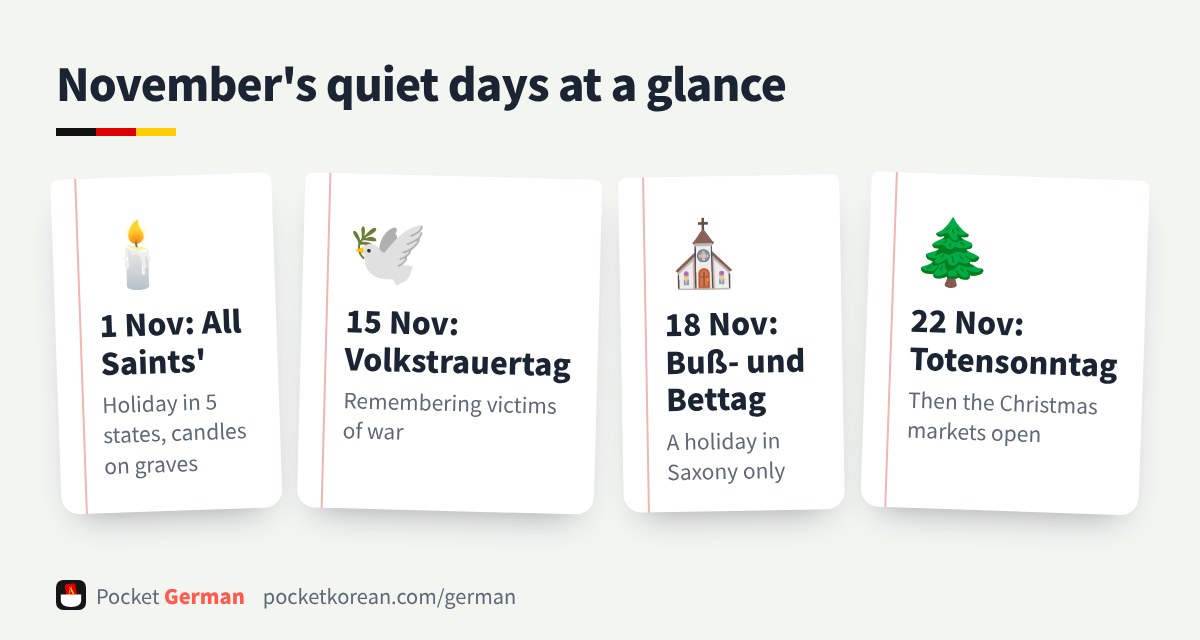
| Date (2026) | Day | Public holiday? |
|---|---|---|
| Sun 1 Nov | All Saints' (Allerheiligen) | 5 states (BW, BY, NW, RP, SL) |
| Mon 2 Nov | All Souls' (Allerseelen) | No |
| Sun 15 Nov | Volkstrauertag | Sunday, a "quiet day" |
| Wed 18 Nov | Buß- und Bettag | Saxony only |
| Sun 22 Nov | Totensonntag | Sunday, a "quiet day" |
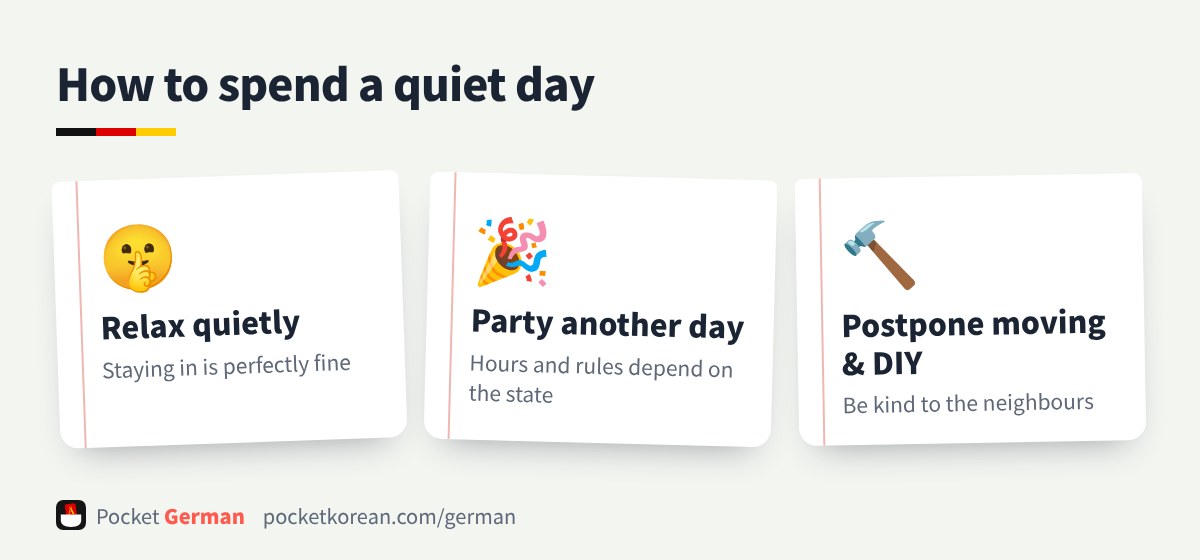
How to behave on a quiet day
State laws list these days as "quiet holidays" (stille Feiertage). For set hours, dance events and loud public events are restricted — people call it the Tanzverbot (dance ban). Which hours and what exactly is banned depends on the state. Staying at home quietly is perfectly fine, but parties, moving house or noisy DIY are better saved for another day.
Today's German words
| Word | Meaning |
|---|---|
| der Friedhof | cemetery |
| das Grablicht | grave candle |
| der Feiertag | public holiday |
| still | quiet |
| gedenken (+ genitive) | to remember, commemorate |
| das Tanzverbot | dance ban |
November in Germany is a little dark — which makes the candles feel all the warmer. Einen ruhigen November! 🕯️