Life in Germany · Life & culture
Shoes off in German homes? Hausschuhe, slippers and 'Puschen'
November, and a moment's pause at the front door
November in Germany brings plenty of rain, and the streets are covered in wet leaves. The first time a German friend invites you round, you may find yourself hesitating at the door: "Should I take my shoes off, or just walk in?" In films, Germans often seem to wear shoes indoors, but in reality a lot of households take their shoes off and put on slippers (die Hausschuhe). It isn't a rule everyone follows, though, as it is in Japan or Korea — it really depends on the household.
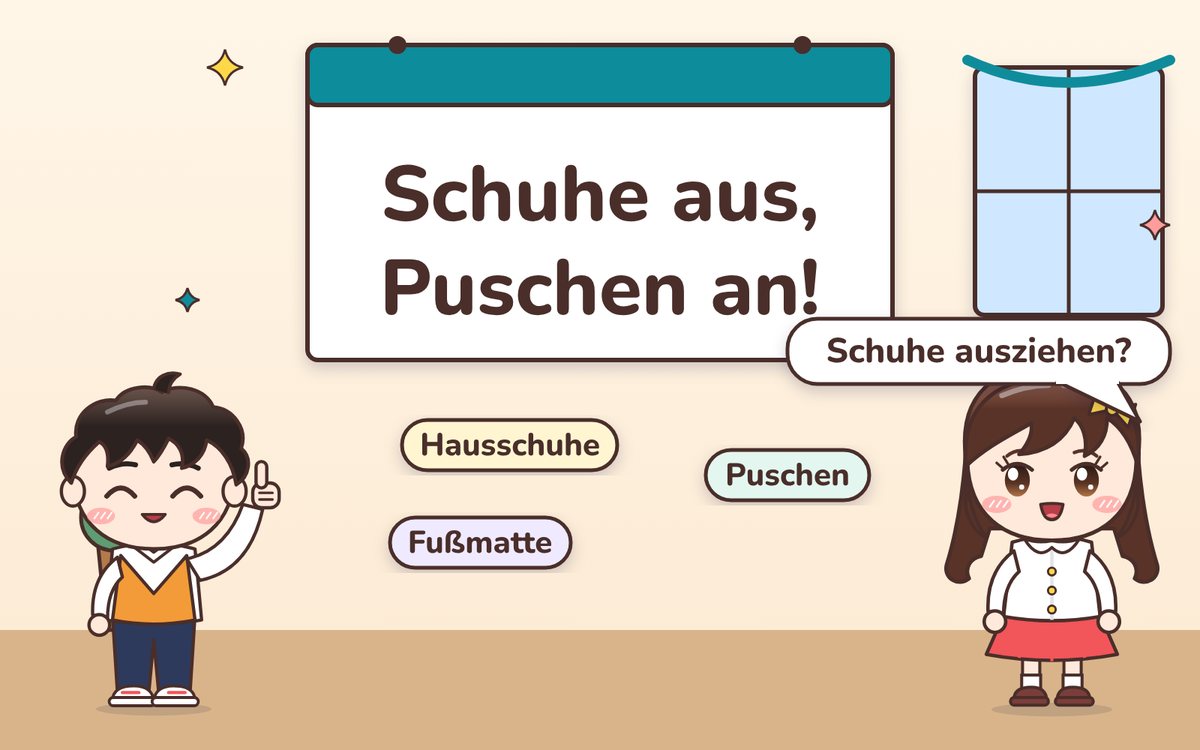
No step at the entrance, but always a doormat
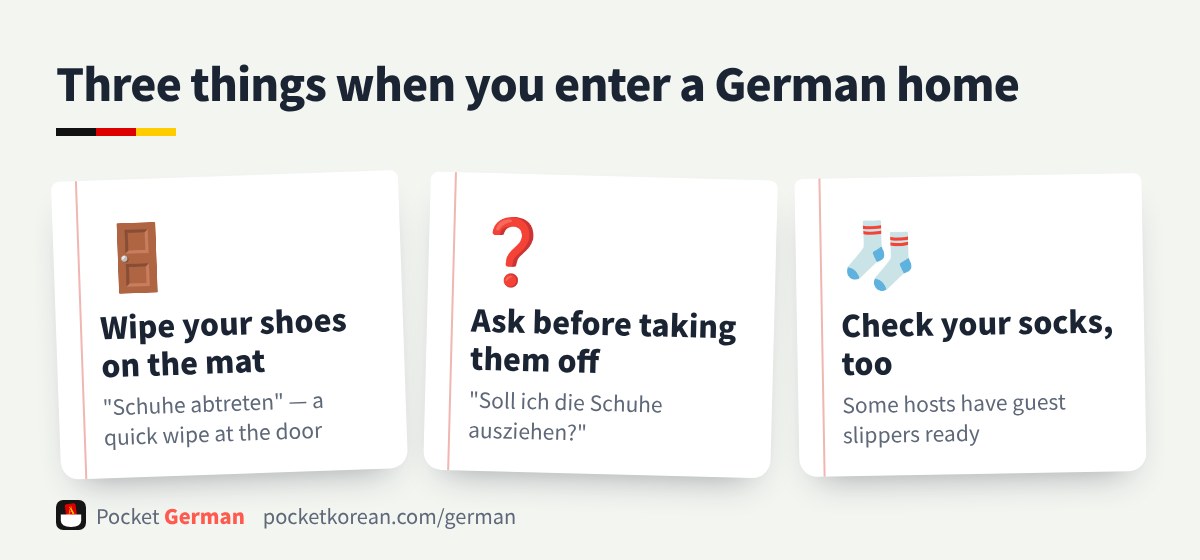
Unlike in many Asian homes, German flats have no raised step or special area at the entrance. You open the door and you're straight in the hallway (der Flur), where shoes go on a shoe cabinet or rack. What almost every home does have is a doormat (die Fußmatte). Wiping the soles of your shoes on it before you go in is called Schuhe abtreten. You'll probably spot a sign in the stairwell of your building saying "Bitte Schuhe abtreten!" (Please wipe your feet!)
If you're a guest, just ask
The easiest thing is simply to ask: "Soll ich die Schuhe ausziehen?" (Shall I take my shoes off?) If your host says "Ja, gern", take them off; if they say "Nein, lass ruhig an!" (No, keep them on!), just walk in. Some hosts will hand you a pair of guest slippers. At big parties with lots of people, it's also common to keep your shoes on, so watch what the host and other guests do and follow along. And in winter, it helps to check your socks before you leave home.
| Situation | What people usually do |
|---|---|
| First visit to a friend's home | Wipe your shoes on the mat and ask whether to take them off |
| Big party or birthday get-together | Follow the host and the other guests |
| A tradesperson (Handwerker) comes round | Often they keep their shoes on; some use shoe covers |
| Office, school, public offices | Shoes stay on |
Many words for "slippers"
The standard word is die Hausschuhe. Slippers that are open at the back are die Pantoffeln. But in Berlin and the north you'll often hear die Puschen as well. Comfy, worn-out old shoes can also be called die Latschen. There are some fun idioms too: a Pantoffelheld ("slipper hero") is a teasing word for a husband who does whatever his wife says at home, and aus den Latschen kippen ("to tip out of your old shoes") means to be so shocked you nearly faint.
In winter, slippers are your best friend
German homes are usually heated with radiators rather than underfloor heating, so in winter the floor can be colder than you'd expect. That's why thick felt slippers (die Filzpantoffeln) are popular, and as winter approaches, the slipper section in shops gets bigger. Plenty of people give them as Christmas presents, too. This evening, leave your wet shoes by the door and slip into something warm.
Today's German words
| Word | Meaning |
|---|---|
| die Hausschuhe | slippers |
| die Puschen | slippers (northern Germany, Berlin) |
| die Fußmatte | doormat |
| die Schuhe ausziehen | to take your shoes off |
| die Schuhe abtreten | to wipe your shoes (on the mat) |
| der Flur | hallway, the area by the front door |
Mach's dir gemütlich — enjoy some warm feet tonight! 🧦