Life in Germany · Life & culture
9 November, Germany's 'day of fate' — the fall of the Wall and a day of remembrance
Four moments in history on one date
This Monday, 9 November, is a very special day in the German calendar. It isn't a public holiday, so shops and schools are open as usual, but you'll hear about it on the news and see it on the streets all day. That's because some of the happiest and some of the darkest moments in German history all happened, by coincidence, on 9 November. Germans sometimes call it the "day of fate" (der Schicksalstag).
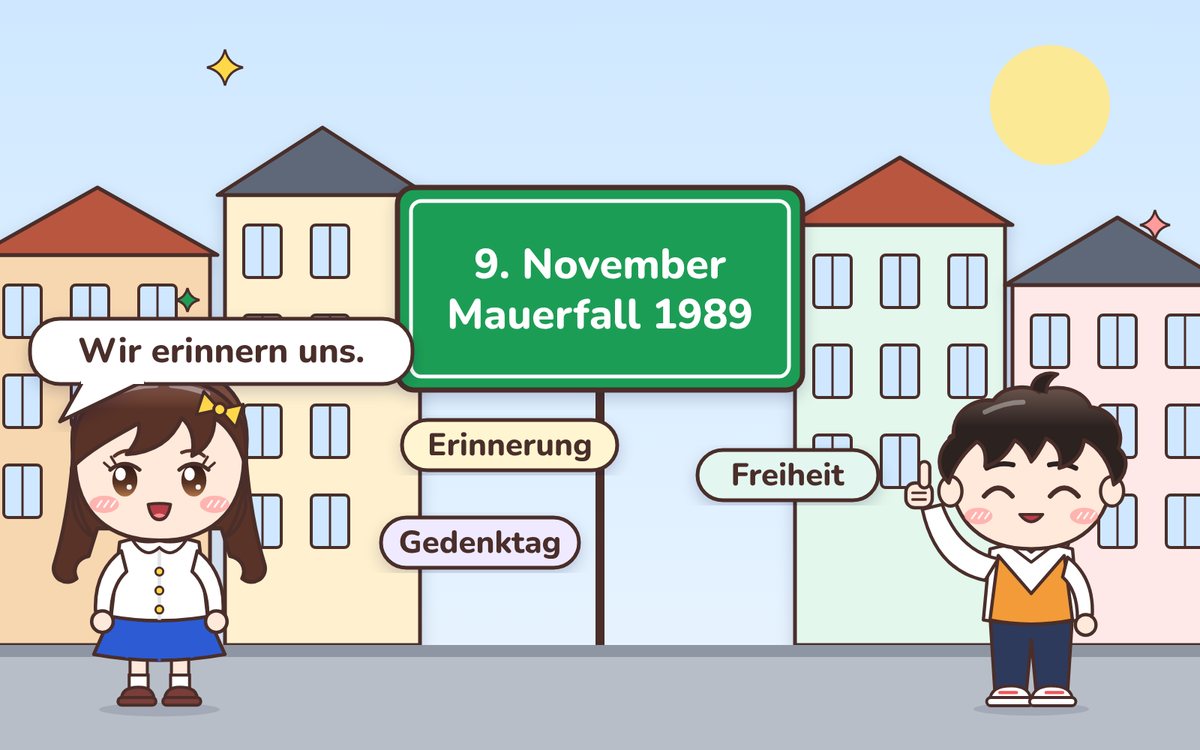
From 1918 to 1989
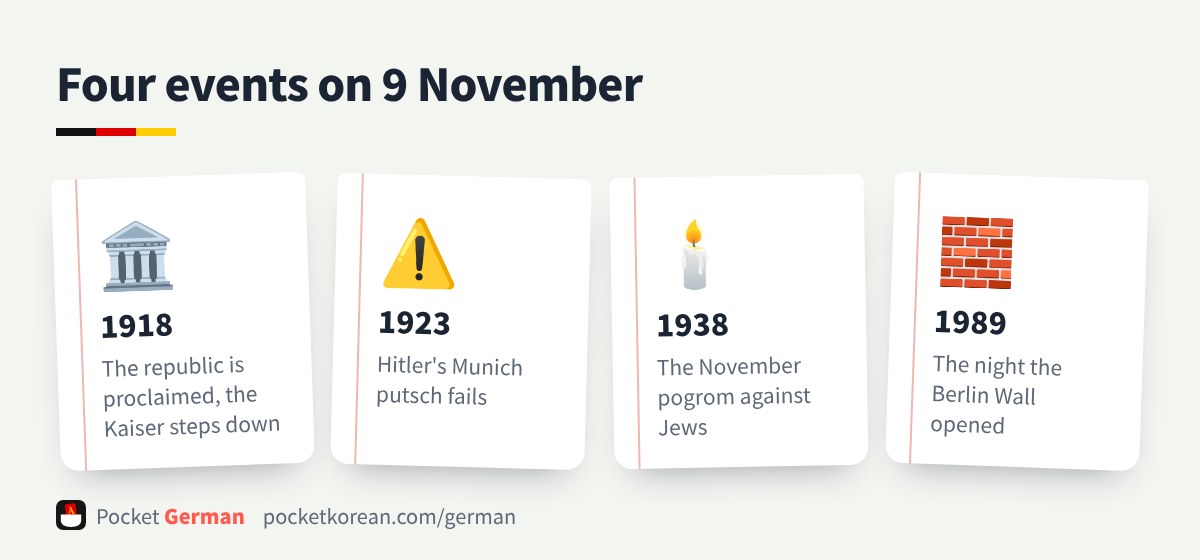
| Year | What happened? |
|---|---|
| 1918 | At the end of the First World War the Kaiser stepped down, and Philipp Scheidemann proclaimed the republic from a window of the Reichstag building in Berlin. About two hours later, Karl Liebknecht proclaimed a "socialist republic" at the Berlin Palace |
| 1923 | Hitler and Ludendorff staged a putsch in Munich and marched to the Feldherrnhalle, where the Bavarian police stopped them |
| 1938 | The November pogrom, when the Nazis attacked Jews all over the country. More than 1,200 synagogues were set on fire, hundreds of people were killed, and more than 30,000 Jewish men were taken to concentration camps |
| 1989 | At an evening press conference, East German Politburo member Günter Schabowski said the new travel rules applied "immediately". That night the Bornholmer Straße checkpoint was the first to open, and the Berlin Wall fell |
Why isn't it a public holiday?
The fall of the Wall was a joyful day, so some people suggested making it the national holiday. But because the 1938 pogrom fell on the same date, it was seen as unsuitable for a day of celebration. So German Unity Day became 3 October, the day East and West Germany officially became one country. 9 November isn't a day off but a day of remembrance (der Gedenktag). The German Historical Museum even objects to explaining the date only with the word "fate": history isn't fate, it's made by people's decisions.
How Germans remember it
Every year there's a ceremony at the Berlin Wall Memorial on Bernauer Straße, where people put roses into the gaps in the remaining Wall and light candles. On the same day, many neighbourhoods hold memorials for the victims of 1938. Walking around, you may notice small brass plaques set into the pavement: Stolpersteine (der Stolperstein). Each one sits in front of a home where a victim of the Nazis once lived, with their name and dates. Around 9 November, volunteers polish these stones and leave flowers and candles. If you pass a shiny one, stop for a moment and read the name.
| Good to do | Better avoid |
|---|---|
| Go to the Wall Memorial or a free museum tour | Talking loudly or taking selfies at a memorial |
| Stop and read the names on a Stolperstein | Putting your bags down on a Stolperstein |
| Ask a German friend, "What was that day like for your family?" | Calling the day just a "celebration" |
Places to go in Berlin this year
This year Berlin Freedom Week runs from 7 to 14 November, with lots of talks, tours, films and other events. On the 9th, the German Historical Museum opens for free and offers tours about the Wall and the pogrom (sign up at the ticket desk on the day). Not in Berlin? No problem: many towns have Stolpersteine, and memorials are held all over the country. Search your local council's website or local paper for "Gedenken 9. November".
Today's German words
| Word | Meaning |
|---|---|
| der Mauerfall | fall of the Berlin Wall |
| der Schicksalstag | day of fate |
| der Gedenktag | day of remembrance, commemoration day |
| die Erinnerung | memory, remembrance |
| der Stolperstein | Stolperstein (brass memorial plaque for a victim) |
| die Wiedervereinigung | (German) reunification |
Nie wieder — never again. May it be a day of remembering. 🕯️