Life in Germany · Life & culture
Yellow, blue, brown — a guide to sorting your rubbish in Germany (Mülltrennung)
Everyone stops in front of the bins at first
The first time you take the rubbish out after moving to Germany, you'll find a whole row of bins in different colours in the courtyard or behind the building. Where does the yoghurt pot go? And the pizza box? You can stand there for quite a while. Even Germans get it wrong sometimes. But the basic idea is simple: sort by material. Sorting your rubbish like this is called die Mülltrennung (waste separation).
The bins by colour: all you need to know
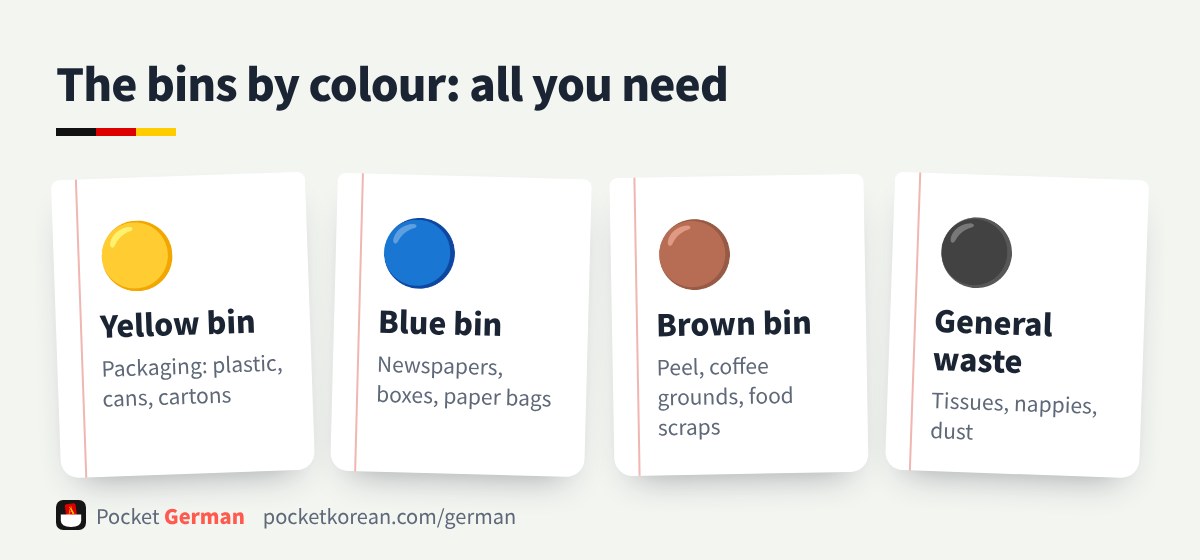
| Bin | What goes in | What doesn't |
|---|---|---|
| 🟡 Yellow bin / yellow bag (Gelbe Tonne / Gelber Sack) | Plastic, metal and mixed packaging: yoghurt pots, cans, drink cartons, plastic wrapping | Paper, glass, plastic that isn't packaging, like toys (varies by area) |
| 🔵 Blue bin (Papiertonne) | Newspapers, cardboard boxes, paper bags | Greasy paper, receipts (thermal paper), tissues |
| 🟤 Brown bin (Biotonne) | Fruit and vegetable peel, coffee grounds, eggshells, dry leaves | Plastic bags (in many places even "compostable" ones) |
| ⚫ General waste (Restmüll) | Tissues, nappies, dust, broken china | Batteries, electronics, anything recyclable |
Bin colours and rules vary a little from town to town. In Berlin, for example, many buildings have a recycling bin (Wertstofftonne) that also takes plastic and metal that isn't packaging. So when you move, the first thing to look up is your local waste calendar or app (Abfallkalender, Abfall-App).
Glass by colour — and mind the times
Glass bottles without a deposit (Pfand) and jam jars go into the big bottle banks (der Altglascontainer) on the street. They usually have three slots: white (Weißglas), brown (Braunglas) and green (Grünglas). Bottles in in-between colours, like blue or red, mostly go in the green one. Take the lids off and put them in the yellow bin.
One thing to watch out for: breaking glass is loud, so many bottle banks have set times when you can use them (Einwurfzeiten). Usually that's daytime on weekdays — not at night, on Sundays or on public holidays. Check the sign on the container.
Tricky items
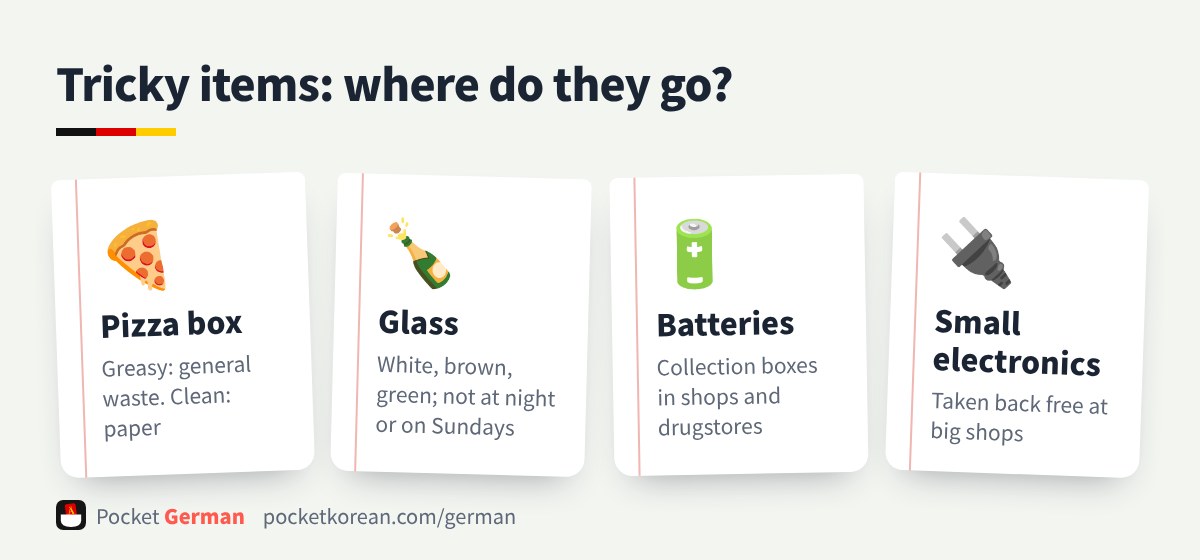
- Pizza boxes — very greasy ones go in general waste; clean parts go in the paper bin
- Yoghurt pots — no need to wash them. Just scrape them empty with a spoon. It's even better if you pull off the aluminium lid and put it in separately
- Batteries — never put them in general waste. Use the collection boxes near the tills in supermarkets and drugstores (Drogerie)
- Small electronics — small things like broken earphones or chargers are often taken back free of charge by large supermarkets and shops that sell electronics
- Large furniture — for bulky waste (der Sperrmüll), book a collection with the council or the waste company, or take it to the recycling centre (der Wertstoffhof, Recyclinghof) yourself
Why all this sorting?
When rubbish is collected separately, paper can become paper again, glass can become glass again, and food waste can be turned into compost or biogas. Mixed up, a lot of it often just has to be burned. There are practical reasons too: if a bin has a lot of the wrong things in it, the collectors sometimes leave it behind without emptying it, and if there's a lot of general waste, the service charges (Nebenkosten) your landlord passes on can go up. You share the bins with your neighbours, so sorting well is good neighbourly manners, too.
Today's German words
| Word | Meaning |
|---|---|
| die Mülltrennung | waste separation, sorting rubbish |
| die Mülltonne | wheelie bin (large bin) |
| der Gelbe Sack | yellow bag (for packaging) |
| der Biomüll | food and garden waste |
| der Restmüll | general waste |
| das Altglas | waste glass (empty glass bottles and jars) |
When you take the rubbish out tonight, have another look at the bin colours. Viel Erfolg beim Trennen! ♻️