Life in Germany · Life & culture
Schrippe, Semmel, Weckle — buying bread rolls at a German bakery
7 a.m., and there's a queue outside the bakery
In Germany the lights are on at the local bakery (die Bäckerei) from early in the morning. People on their way to work, people out walking the dog, even people with just a coat thrown over their pyjamas all queue up to buy warm bread rolls. This small roll, crusty on the outside and soft on the inside, is das Brötchen. Cut it in half, add butter and jam, or cheese or ham, and you have a German breakfast. Lots of people especially love fetching freshly baked Brötchen on a weekend morning and eating them together with the family.
Same roll, different name in every region
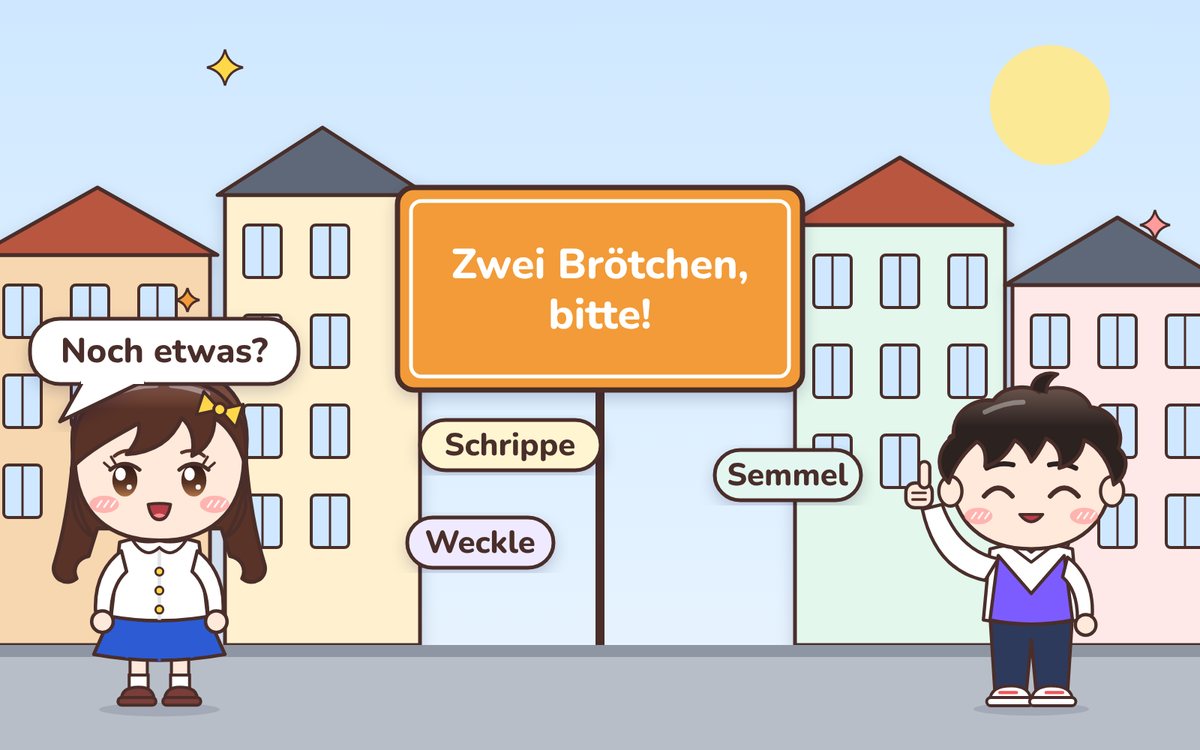
The fun part is that this roll has a different name depending on where you are. The standard word is Brötchen, but at the local bakery the regional name often sounds more natural.
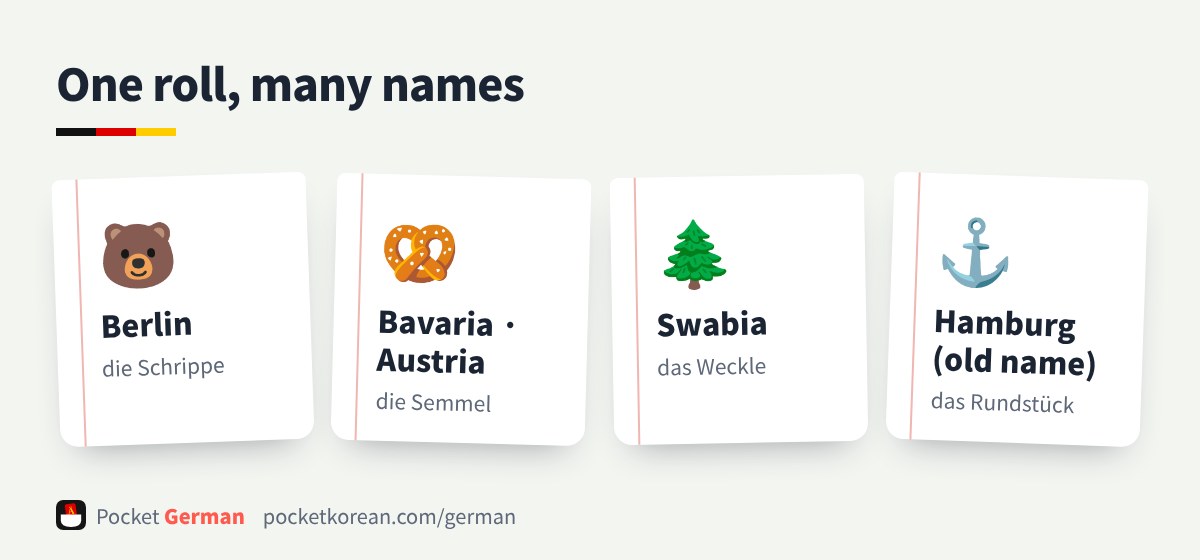
| Region | What it's called |
|---|---|
| Most regions (standard German) | das Brötchen |
| Berlin and Brandenburg | die Schrippe |
| Bavaria and Austria | die Semmel |
| Swabia (around Stuttgart) | das Weckle, der Weck |
| Hamburg (old name) | das Rundstück |
Say "Zwei Schrippen, bitte!" at a Berlin bakery and you'll sound like a local; ask for a Schrippe in Munich and the person behind the counter might smile a little. But don't worry: Brötchen works everywhere.
It's not just white rolls
Look at the shelves in a bakery and you'll see a huge choice. Besides the basic white roll, these are the ones you'll see most often:
- Mohnbrötchen / Sesambrötchen — rolls topped with poppy seeds or sesame seeds
- Körnerbrötchen — rolls with seeds and grains, like sunflower or pumpkin seeds
- Roggenbrötchen — rye rolls, a bit heavier and slightly sour
- Laugenbrötchen — brown, salt-topped rolls like a pretzel (die Brezel), especially popular in the south
- das belegte Brötchen — a filled roll with cheese, ham, egg and so on, ready to eat
How to order at the bakery
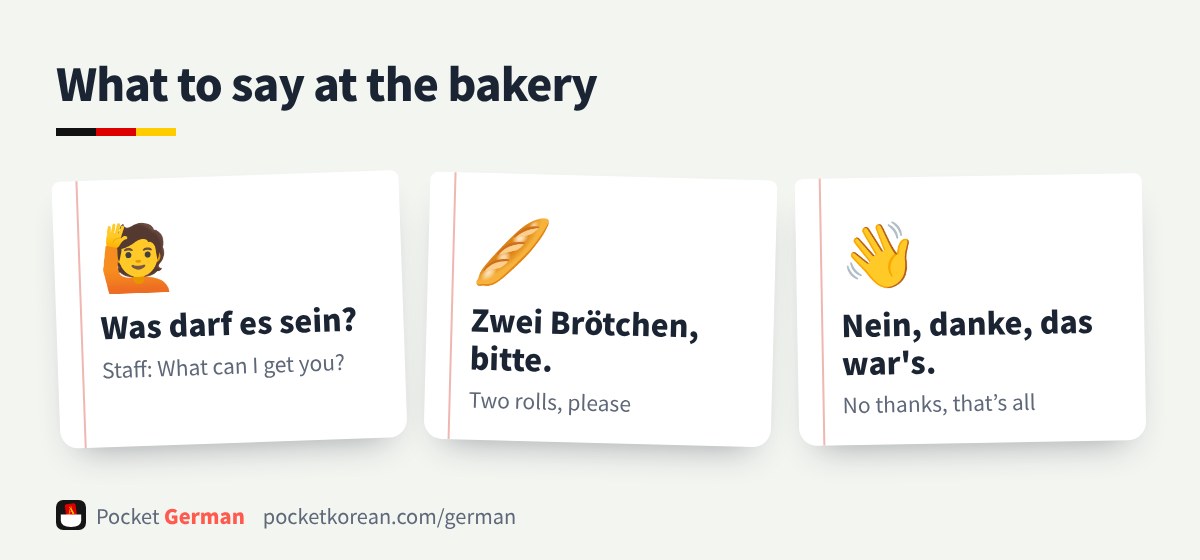
Ordering at a bakery is short and quick. In the morning there's often a long queue behind you, so it helps to decide what you want before it's your turn. It usually goes like this:
- Assistant: Was darf es sein? (What can I get you?)
- You: Zwei Brötchen und ein Mohnbrötchen, bitte.
- Assistant: Noch etwas? (Anything else?)
- You: Nein, danke, das war's. (No, thanks, that's all.)
Some small shops still take cash only, or don't take cards for amounts under a few euros, so it's handy to have a few coins with you. Many bakeries are also open for a few hours on Sunday morning, but the times vary from state to state and from shop to shop.
Bread men you only see in November
At the moment you'll see sweet bread figures shaped like little people in bakery windows, with arms and legs and raisins for eyes. They appear around St Martin's Day (Sankt Martin) on 11 November and stay until St Nicholas' Day in early December. In the Rhineland they're often called der Weckmann, and in Westphalia and the north der Stutenkerl. Some even hold a little white clay pipe. Children are often given one after the lantern procession, so when you spot these bread men, you know winter has begun in Germany.
Today's German words
| Word | Meaning |
|---|---|
| die Bäckerei | bakery |
| das Brötchen | bread roll |
| die Schrippe | bread roll (Berlin) |
| die Semmel | bread roll (Bavaria, Austria) |
| die Brezel | pretzel (knot-shaped bread) |
| der Weckmann | sweet bread man (November–December) |
Tomorrow morning, try saying "Zwei Brötchen, bitte!" at your local bakery. Guten Appetit! 🥐