Pocket German
German lessons📅 Updated daily
A new grammar lesson and a new everyday expression lesson every day, plus exam tips every other day. Newest first.
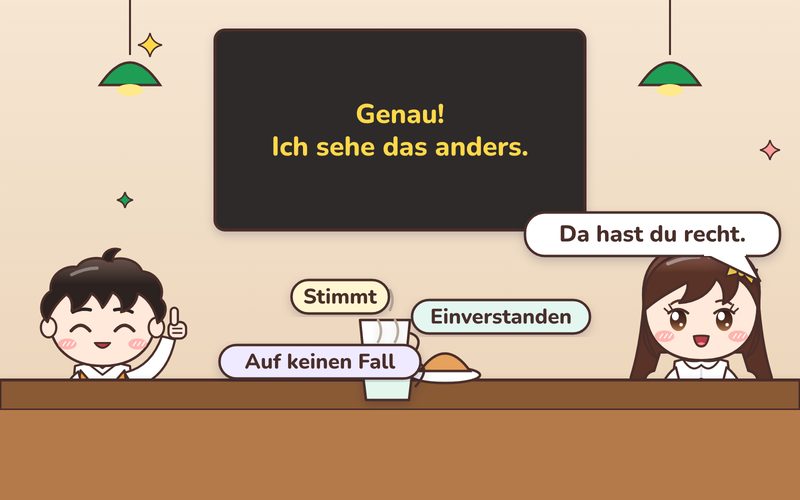
ExpressionsB1 Genau! Ich sehe das anders: agreeing and disagreeing in GermanGermans say what they think clearly, in meetings and among friends. How to agree with Genau and Da hast du recht, and how to disagree politely with Ich sehe das anders and Das stimmt nicht ganz, for every situation.
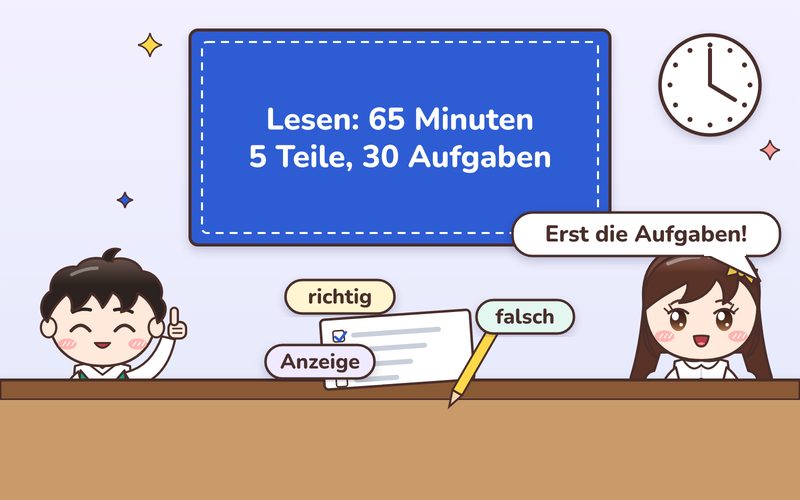
ExamsB1 B1 reading: you don't have to read every word — skimming, scanning and managing your timeGoethe B1 reading (Lesen) is 65 minutes, five parts and 30 questions. A different reading strategy for each part, choosing '0' when matching ads, richtig/falsch traps and the time for filling in the answer sheet, based on the official material. Plus a comparison with DTZ reading.
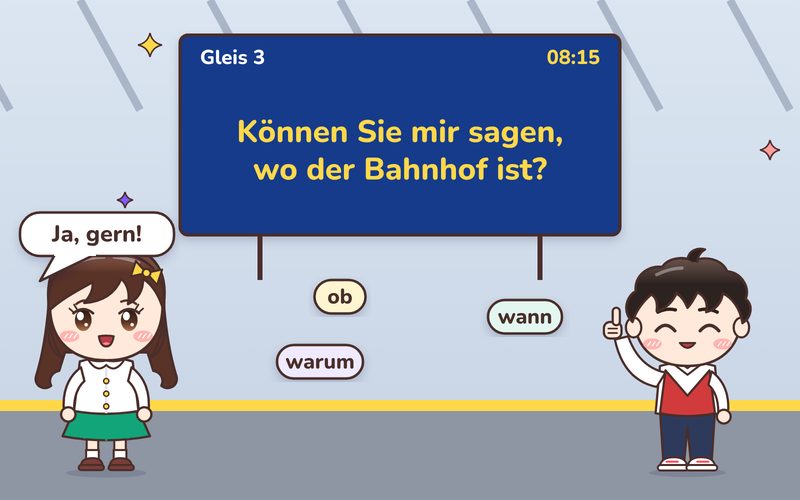
GrammarB1 Können Sie mir sagen, wo …? Asking politely with indirect questions\"Could you tell me where the station is?\" sounds more polite than \"Where's the station?\" German indirect questions start with a question word or ob, and the verb goes to the end. Polite question frames, how to use ob, wann and warum, and common mistakes.
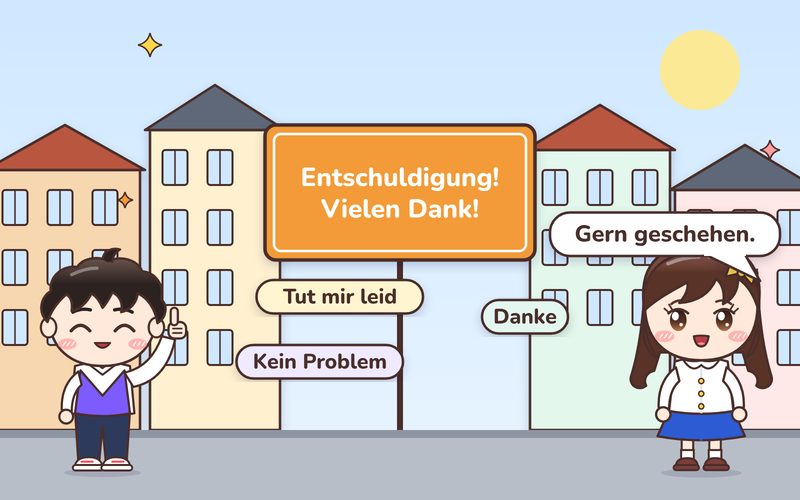
ExpressionsA2 Entschuldigung, Tut mir leid, Danke: saying sorry and thank you in GermanBumping into someone on the street and forgetting an appointment call for different apologies. The difference between Entschuldigung and Tut mir leid, and how to answer Danke with Gern geschehen or Kein Problem — German you'll use several times a day.
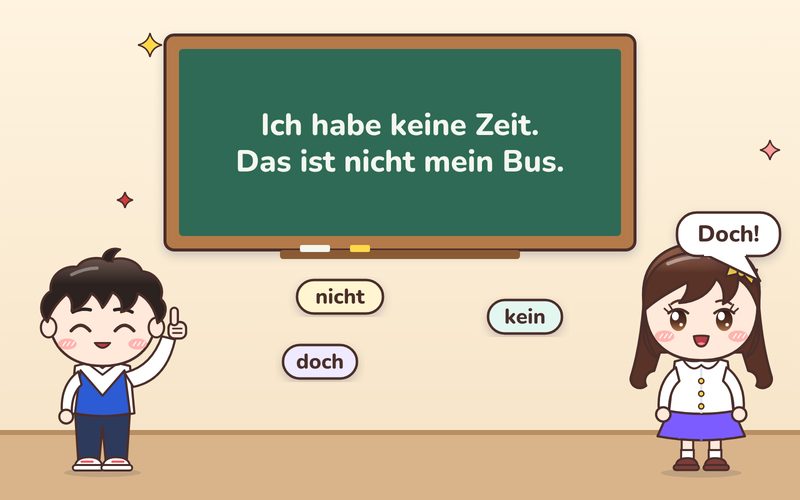
GrammarA2 nicht or kein? How to say no in GermanGerman has two main words for negation: kein before nouns, nicht for everything else. Where nicht goes in the sentence, and doch, the special answer that says 'yes, actually' to a negative question.
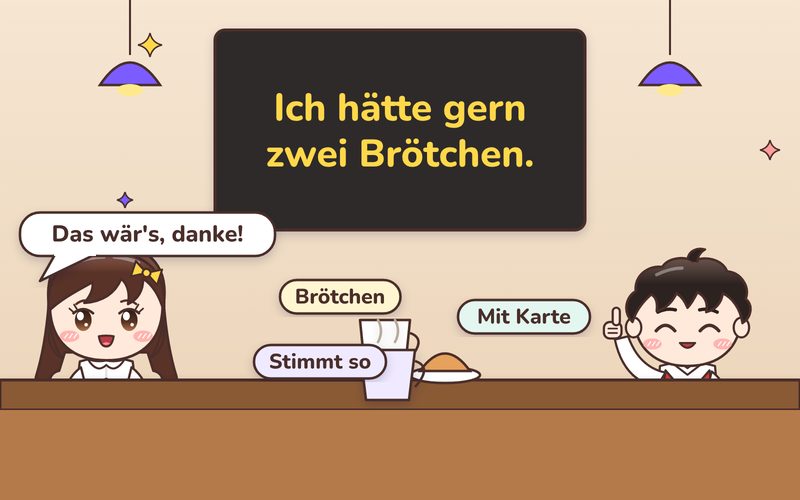
ExpressionsA2 Ich hätte gern zwei Brötchen: German for the bakery and the marketAt a German bakery you order out loud at the counter. Ordering with Ich hätte gern …, answering Sonst noch etwas? with Das wär's, and paying with Mit Karte, bitte — sentences you can use straight away at the bakery and the weekly market.
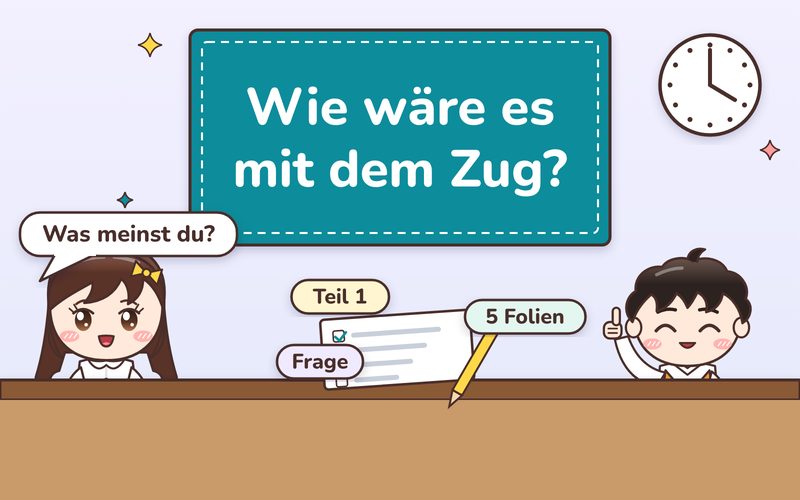
ExamsB1 Goethe B1 speaking: planning together, giving a presentation and asking questionsThe Goethe B1 speaking exam (Sprechen) is usually taken in pairs. Planning something together, a presentation with five slides, and giving feedback and asking questions — the format of the three tasks, how to use your preparation time, ready-to-use German sentences, common mistakes and a one-week practice plan.
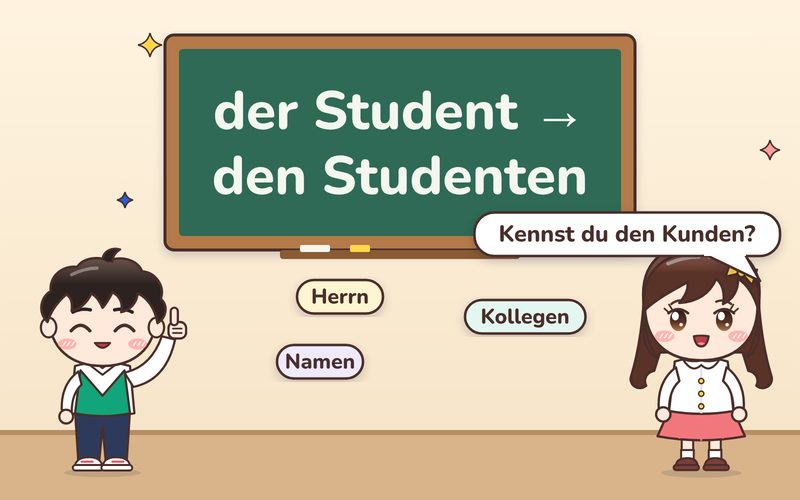
GrammarB1 den Studenten, dem Kunden: masculine nouns that add -n (the n-declension)Why does der Student become den Studenten? Some masculine nouns add -n or -en in every case except the nominative. How to spot these 'n-declension' nouns, special words like Herr and Name, and the most common mistakes.
ExpressionsA2 Sehr geehrte Damen und Herren: formal German emails from the first line to the sign-offEmails to your landlord, the authorities, your insurance or a company follow a fixed pattern in German. Ready-to-use sentences for addressing the reader, explaining why you're writing, mentioning attachments, asking for something and signing off.
GrammarB1 warten auf, denken an: verbs with prepositions, plus darauf and woraufMany German verbs always come with a particular preposition. How to learn pairs like warten auf, denken an and sich kümmern um, and how the da-/wo- compounds (darauf, worauf) stand in for them.
ExpressionsB1 Ich verstehe nur Bahnhof: fun German idioms people use every day'I only understand train station', 'I'll press my thumbs for you', 'That's sausage to me'? Ten idioms Germans really use all the time, with what they mean, when to use them and how casual they are (with friends or in polite settings).
ExamsB1 telc Deutsch B1 speaking test: how to prepare for all three parts, step by stepThe telc Deutsch B1 speaking test is taken in pairs. How to use the 20 minutes of preparation time, German sentences you can use right away in the three parts (getting to know each other, talking about a topic, planning together), common mistakes and a one-week practice plan.
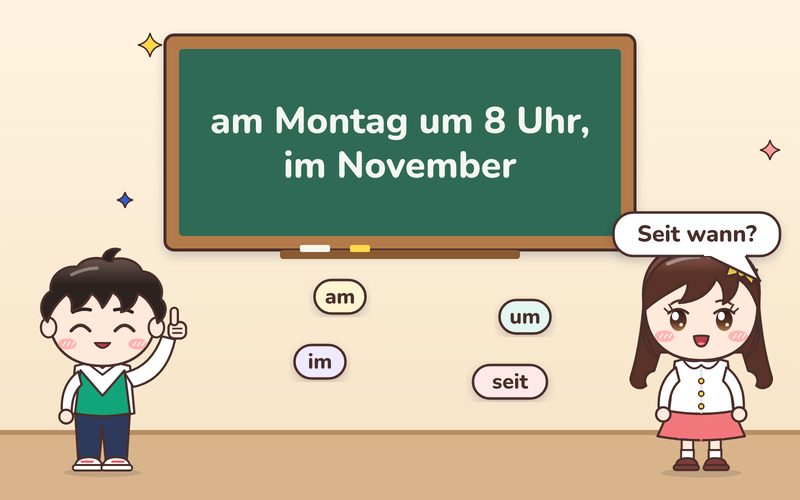
GrammarA2 am Montag, um 8 Uhr, im November: German time prepositions in one placeam, um, im, seit, vor, ab, bis, von … bis — all the prepositions you need to talk about dates and times in German. Which one goes with days, clock times and months, the difference between 'ago' and 'since', and example sentences for appointments and plans.
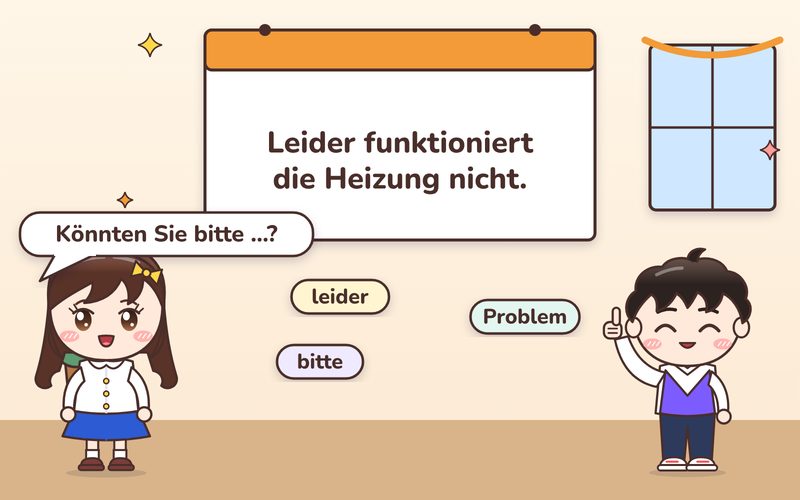
ExpressionsA2 Leider funktioniert … nicht: how to complain politely in GermanThe wrong dish arrives, something you bought breaks, the heating at home stops working — German phrases for making a complaint clearly without getting angry. From Leider …, Ich habe ein Problem mit … and Könnten Sie bitte …? to a short dialogue and things to watch out for.
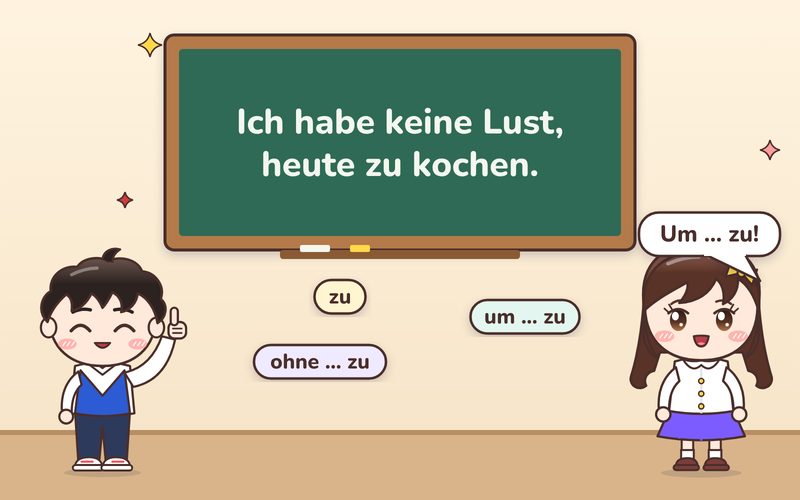
GrammarB1 Hast du Lust mitzukommen? zu + infinitive and um … zu, ohne … zu, statt … zuIch versuche, pünktlich zu sein. / Ich lerne Deutsch, um in Deutschland zu arbeiten. — the zu-infinitive is how German says \"to do\", \"doing\", \"in order to\", \"without …ing\" and \"instead of …ing\". Where zu goes, separable verbs, and why it never comes after modal verbs.
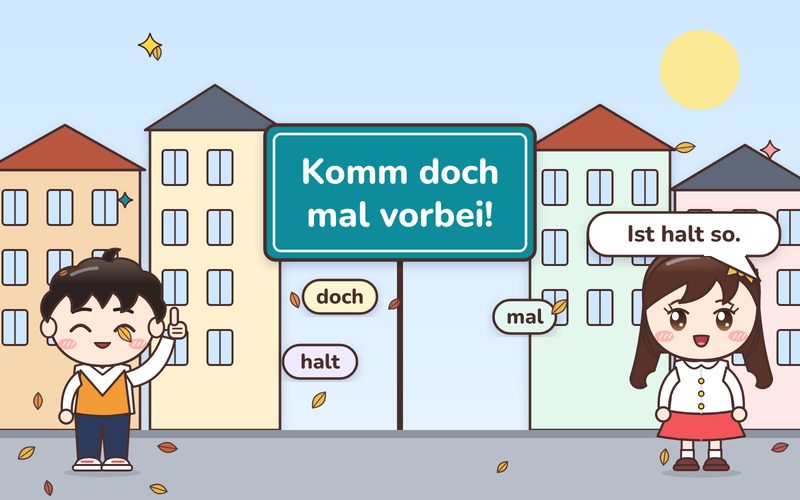
ExpressionsB1 Komm doch mal vorbei! doch, mal, ja, halt, eben — the little words that make German sound naturalGermans keep using little words that are hard to translate. mal and doch to soften a request, ja for 'as you know', halt and eben for 'that's just how it is', and denn for curious questions — when to use them and how they sound.
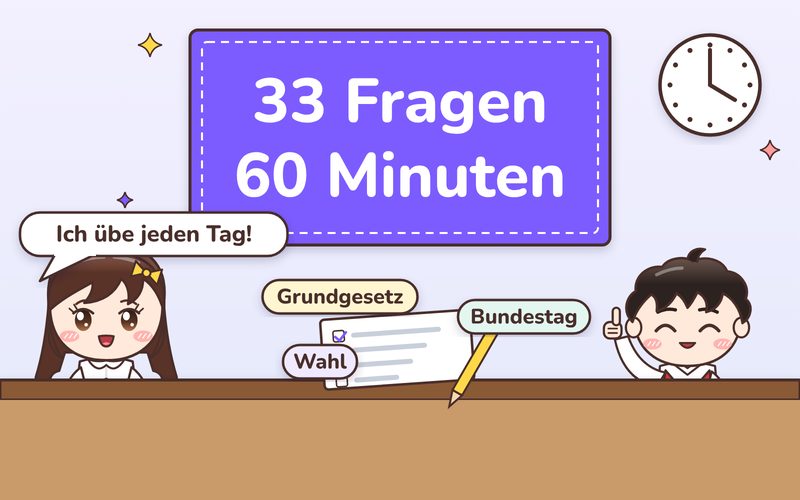
ExamsB1 310 questions, don't panic — smart ways to learn the Leben in Deutschland and citizenship test questionsThe LiD test and the citizenship test take 33 questions from a public bank of 310. How to use BAMF's free online practice centre, learning by topic, the German words that come up most, common mistakes and a three-week study plan.
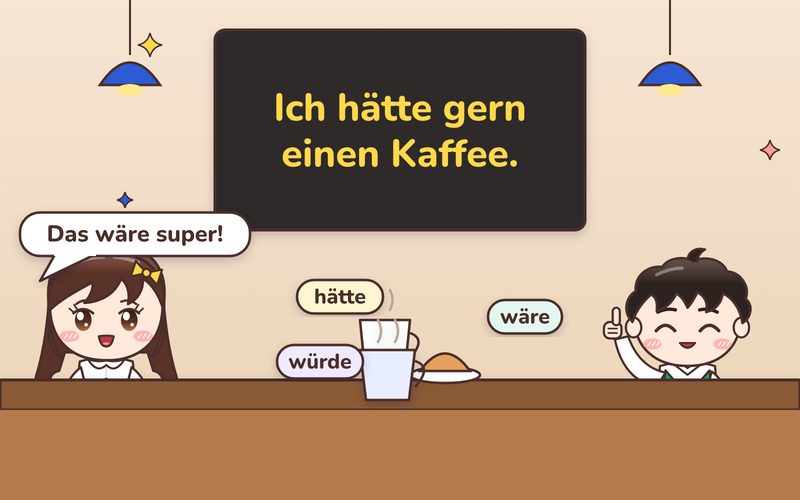
GrammarB1 Ich hätte gern …: the Konjunktiv II for polite requests and wishesIch hätte gern … at the bakery, Könnten Sie …? at the Amt, Wenn ich Zeit hätte … with friends — German uses the Konjunktiv II for polite requests and things that aren't real. würde + infinitive, the must-know hätte, wäre and könnte, wenn clauses and the past form.
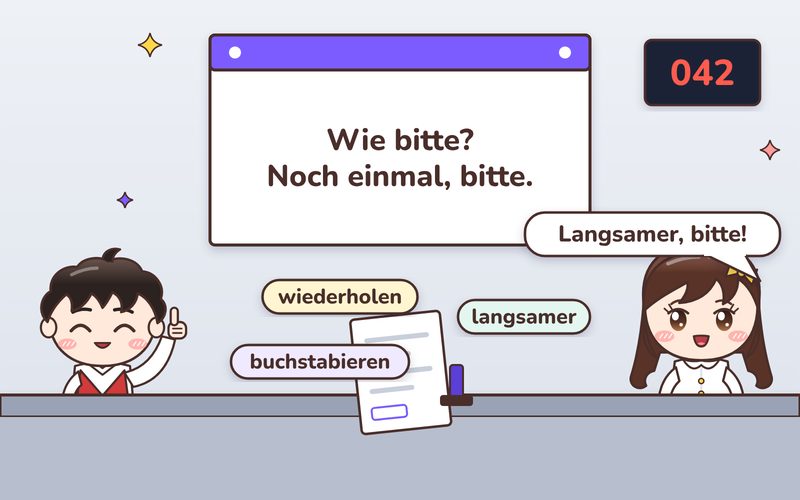
ExpressionsA1 Wie bitte? How to ask people to repeat in German — with confidenceDidn't catch that? Don't just smile and nod. 'Pardon?', 'Could you repeat that?', 'A bit slower, please', 'What does that mean?', 'Could you spell it?' — phrases for the Amt, the doctor's and the phone.
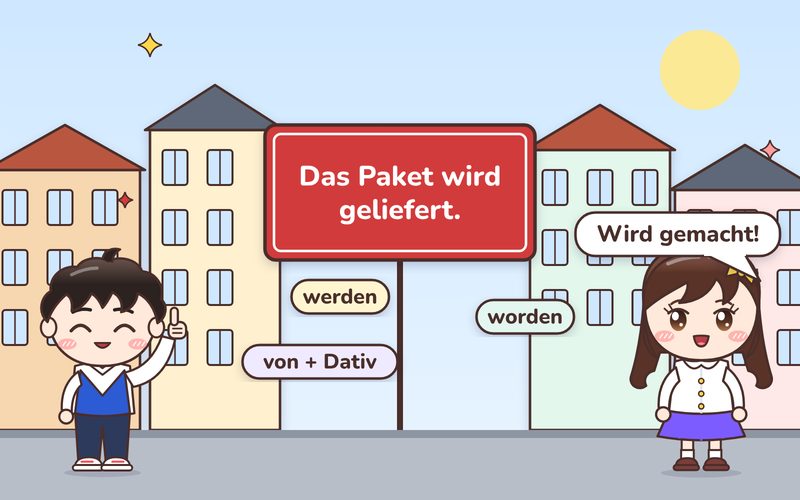
GrammarB1 Das Paket wird geliefert: the German passive, when what happens matters more than whoYour parcel is being delivered, the house was built in 1905 — when the action matters more than the person, German uses werden + past participle. Present, Präteritum, Perfekt (worden!), von + dative, the passive with modal verbs, and the 'state passive' with sein.
ExpressionsA2 Ich habe seit drei Tagen …: describing symptoms at the doctor's in GermanyCold season has started. Booking an appointment at the practice, handing over your insurance card, saying where it hurts and since when, sick notes and prescriptions, referrals to a specialist, and the number to call when the practice is closed.
ExamsA2–B1 DTZ speaking test: how to prepare, from introducing yourself to planning togetherIn the DTZ, the final test of the integration course, speaking matters most. The three parts of the 15-minute pair exam, German sentences you can use right away, common mistakes, a one-week practice plan and free practice material.
GrammarB1 Der Mann, der …: relative clauses in GermanRelative clauses add information to a noun — the man who lives next door, the book I bought. The der/die/das/denen/dessen table, the verb at the end, preposition + relative pronoun (mit der, für den), and was and wo.
ExpressionsA2 Ich rufe wegen … an: German phone calls from hello to goodbyeIn Germany you still phone a lot — the doctor, the landlord, the authorities. How to answer with your name, say why you're calling, ask someone to spell, get put through or leave a message, and end the call.
GrammarA2 Ich werde … or Morgen gehe ich …? Talking about the future in GermanGerman often uses the present tense for tomorrow's plans. So when do you need werden? Present tense + time phrase, werden + infinitive, and werden for "it'll probably be …" guesses.
ExpressionsA2 Mahlzeit! Small talk with colleagues in a German officeMonday's "Wie war dein Wochenende?", lunchtime's "Mahlzeit!", Friday's "Schönes Wochenende!" — the short greetings and replies you hear every day in a German workplace.
ExamsB1 Goethe B1 writing: how to write three texts in 60 minutesAn e-mail to a friend, an opinion post and a polite e-mail to a teacher. The format and timing of the three Goethe B1 Schreiben tasks, ready-to-use German sentences, common mistakes and a one-week practice plan.
GrammarA2 Komm! Kommen Sie bitte! Asking and telling in German: the imperativeWarte mal! Nimm Platz! Rufen Sie mich bitte an! How to form the imperative for du, ihr and Sie, and how bitte, mal and doch make it sound friendly.
ExpressionsA2 Du or Sie? How to Switch to First-Name Terms in GermanSie at first, du once you're closer — but when, and who suggests the switch? From "Wollen wir uns duzen?" to the rules at work, with neighbours and at the office, plus how to say no politely.
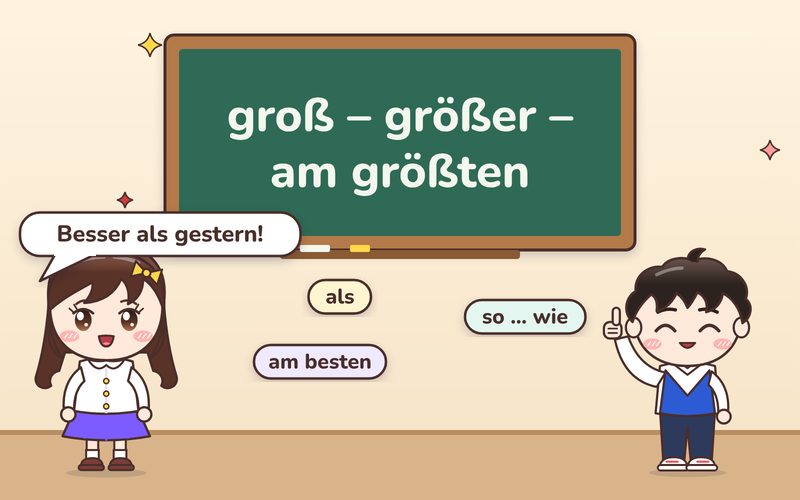
GrammarA2 Bigger, Biggest: German Comparatives and Superlativesbilliger als, am billigsten, so groß wie — how to compare things in German. The -er ending and als, am -sten, adjectives that take an umlaut (älter, größer) and the fully irregular gut–besser–am besten.
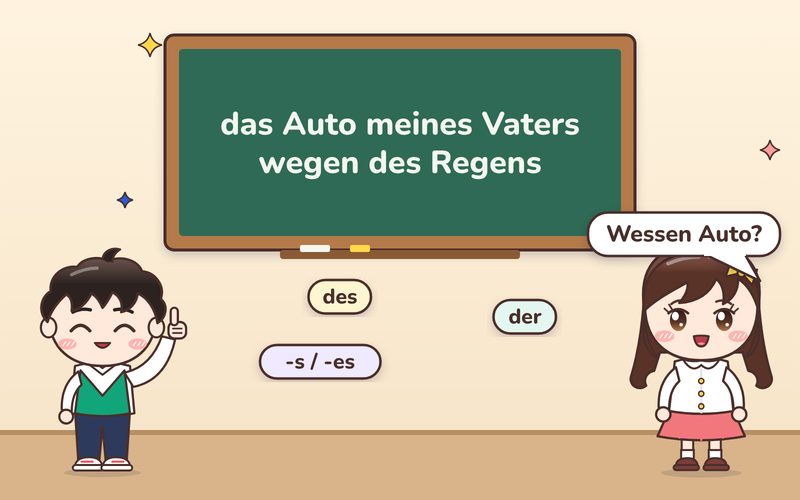
GrammarA2 The German genitivedas Auto meines Vaters, wegen des Regens — the genitive means 'of' and follows wegen, trotz and während. Here are des/der, the -s/-es ending, names, and the von + dative you hear in everyday speech.

ExpressionsA1 Hello and Goodbye in German: Who Says What, and WhereHallo, Moin, Grüß Gott, Tschüss, Schönen Feierabend — German greetings change with the time of day, the region and how formal the situation is. Here is who says what, and how to answer.
ExamsB1 The Einbürgerungstest and "Leben in DeutschlandOne question catalogue, two tests – who needs the Einbürgerungstest and who the "Leben in Deutschland" test, how many questions you must get right, and how to practise for free on bamf.de.
ExamsA2–B1 DTZ: the German test at the end of the integration courseThe Deutsch-Test für Zuwanderer (DTZ) ends the language part of the Integrationskurs. One test, result A2 or B1. Here are the four parts and what B1 is needed for.
ExamsA1–C2 telc Deutsch exams: levels, parts and how to registertelc offers German exams from A1 to C2, plus job-related versions such as Pflege and Beruf. Here is how the exams are built, how they differ from Goethe, and what the certificates are used for.
ExamsA1–C2 The Goethe-Zertifikat (A1–C2)The Goethe-Institut's German exams from Start Deutsch 1 (A1) to C2 — parts, timing, which levels are modular, which level you need for a visa, naturalisation or university, and how to register and prepare.
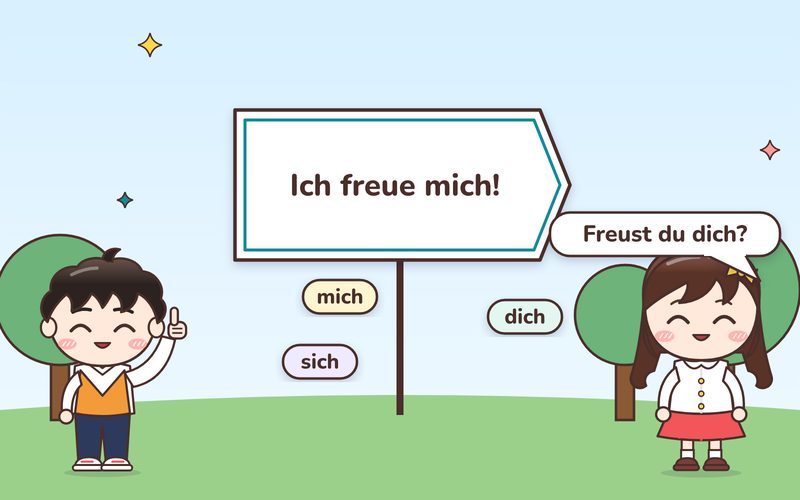
GrammarA2 Reflexive Verbs (sich freuen, sich erinnern)Why German says "Ich freue mich" and "Beeil dich!" – reflexive pronouns in the accusative and dative, where they go in the sentence, and the verbs that need them.
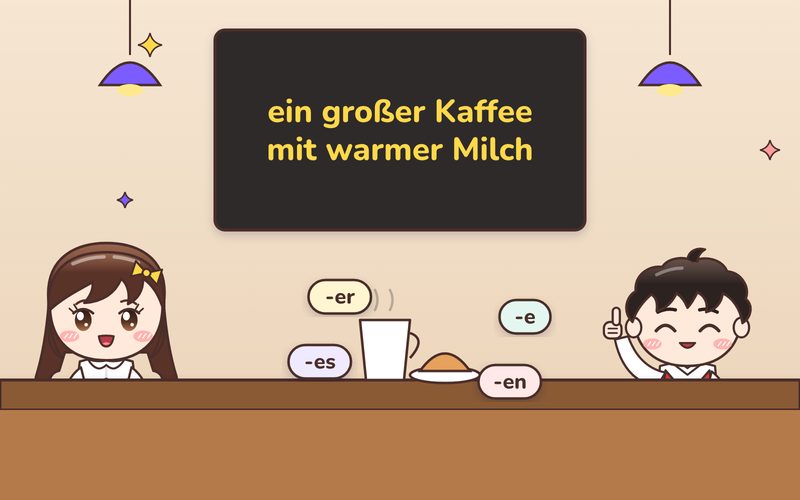
GrammarB1 Adjective endings: der gute, ein guter, guterGerman adjectives before a noun take endings like -e, -en, -er or -es. Three compact tables and one simple strategy make Adjektivdeklination manageable.
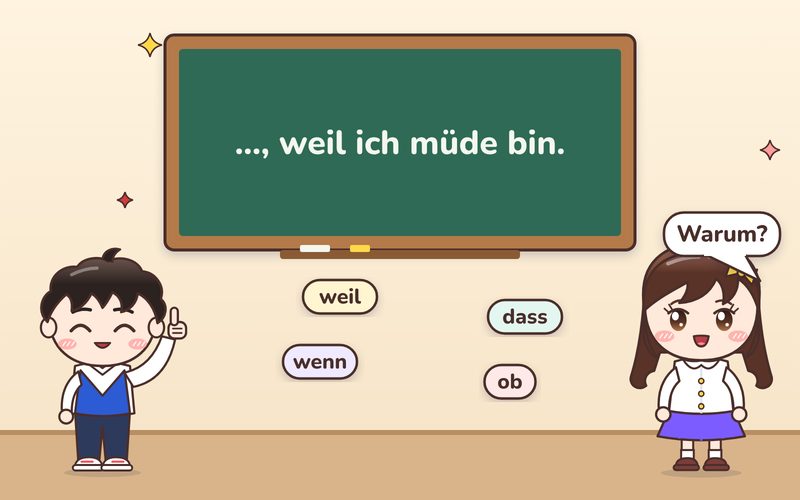
GrammarB1 Subordinate clauses: weil, dass, wenn, ob, obwohl, alsAfter weil, dass, wenn, ob, obwohl and als the conjugated verb jumps to the end of the clause. Learn the word order, the comma, and the difference between weil/denn and wenn/als.
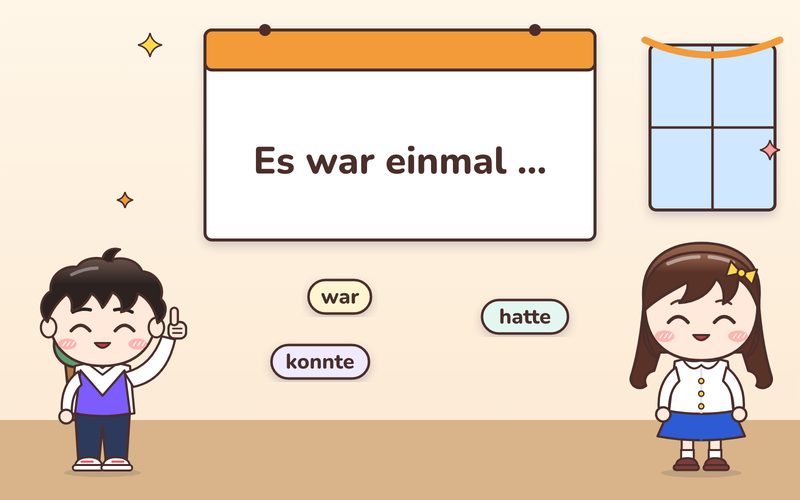
GrammarA2 Simple past in speech: ich war, ich hatte, ich konnteIn spoken German most verbs use the perfect, but sein, haben and the modal verbs prefer the simple past (Präteritum). Here are all the forms, plus es gab.
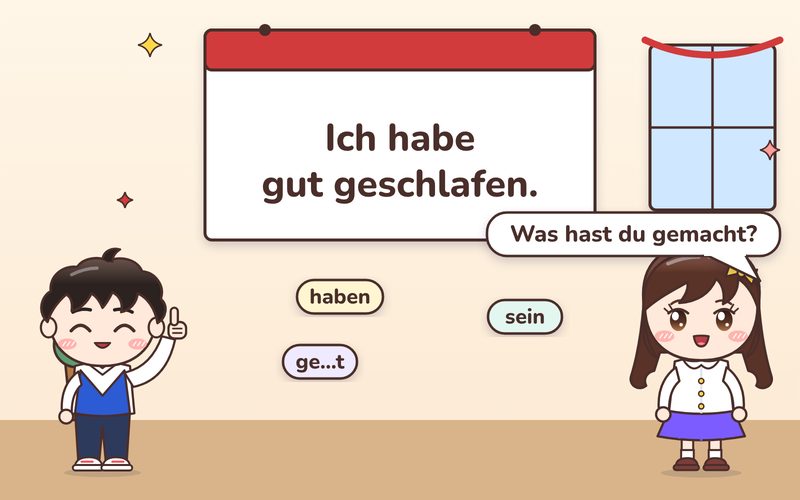
GrammarA2 The Perfekt – Talking About the PastHow to say what you did yesterday in German – haben or sein plus a participle at the end, when to use sein, and how participles are formed.
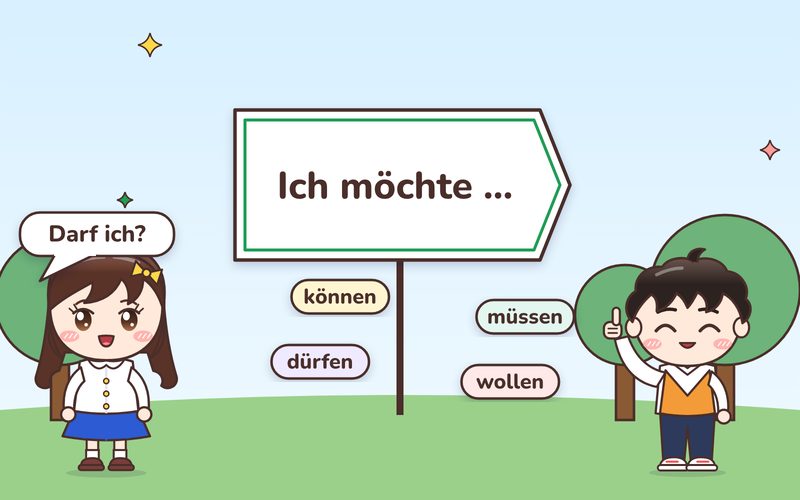
GrammarA1 Modal Verbs – können, müssen, dürfen & Co.Can, must, may, should, want, like – the six German modal verbs, their present-tense forms, why the second verb goes to the end, and the classic trap "muss nicht" vs. "darf nicht".
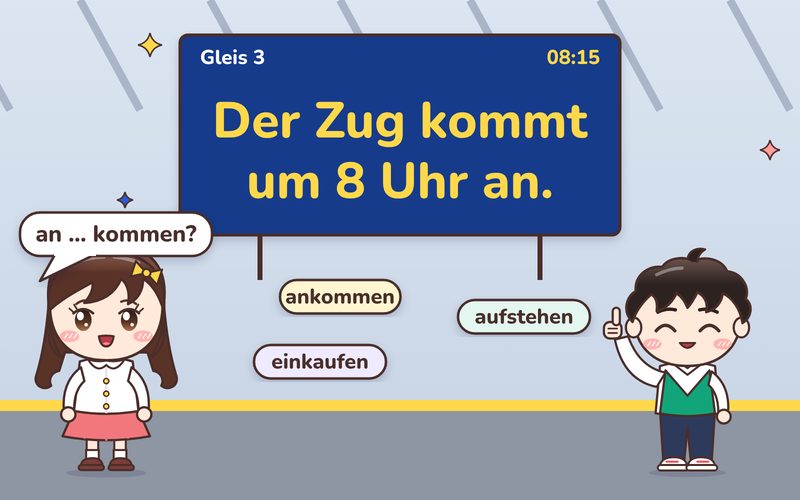
GrammarA1 Separable Verbs (anrufen, aufstehen)Why "anrufen" becomes "Ich rufe dich an": where the prefix of separable verbs goes in main clauses, with modal verbs, in subordinate clauses and in the perfect tense.
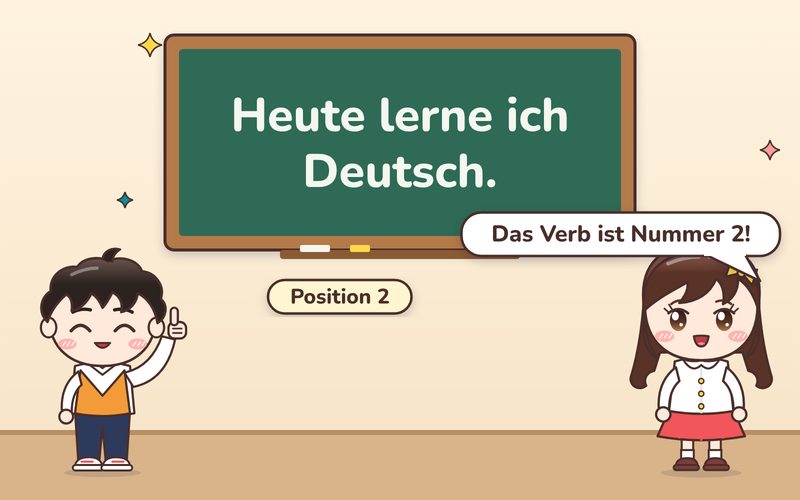
GrammarA1 German Word Order: The Verb in Second PlaceIn German statements the conjugated verb always comes second, in questions it moves to the front, and with modal verbs or the perfect the second verb goes to the very end. Here are the core rules with examples.
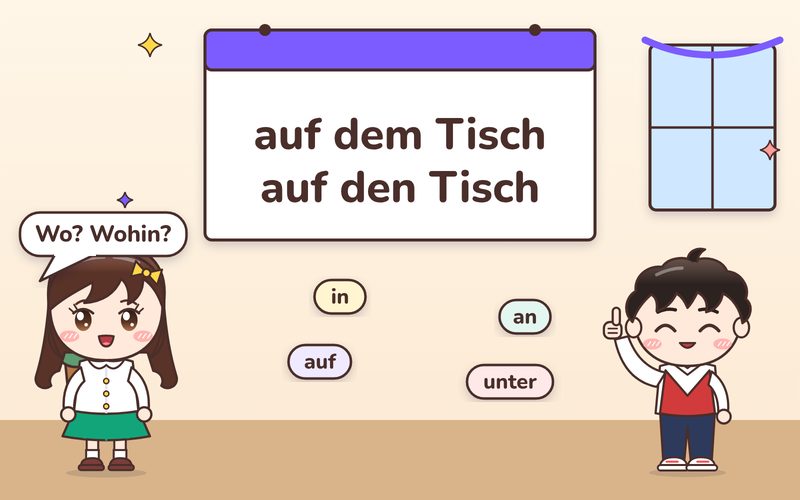
GrammarA2 Two-way prepositions: Wo? or Wohin?an, auf, in, unter and five more take the dative or the accusative. One question decides which: Wo? (where) or Wohin? (where to).
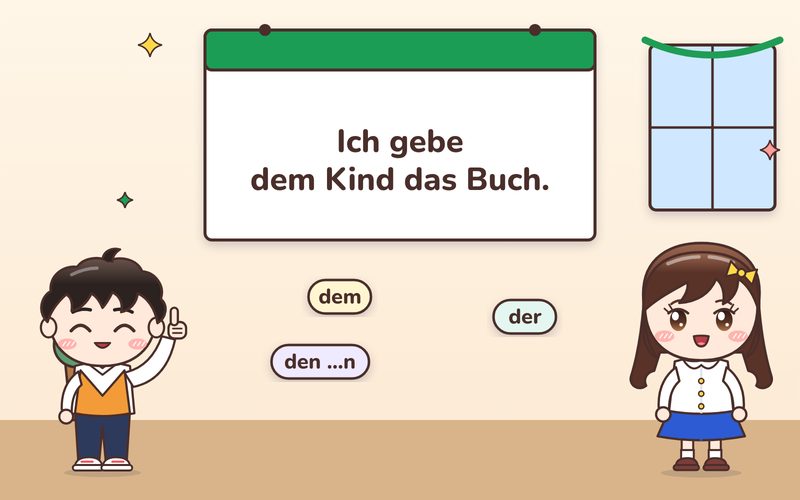
GrammarA2 The Dative CaseDem, der, mir, ihm — learn when German uses the dative case: for the person who receives something, after aus, bei, mit, nach, seit, von, zu, and with verbs like helfen and gefallen.
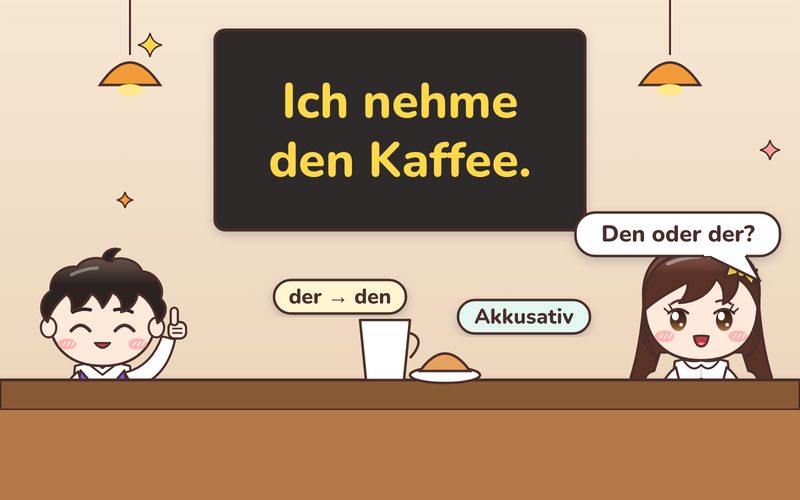
GrammarA1 Nominative vs. AccusativeWho does it and what gets it — the accusative marks the direct object, and at A1 only the masculine article changes (der → den, ein → einen). Plus the object pronouns mich, dich, ihn.
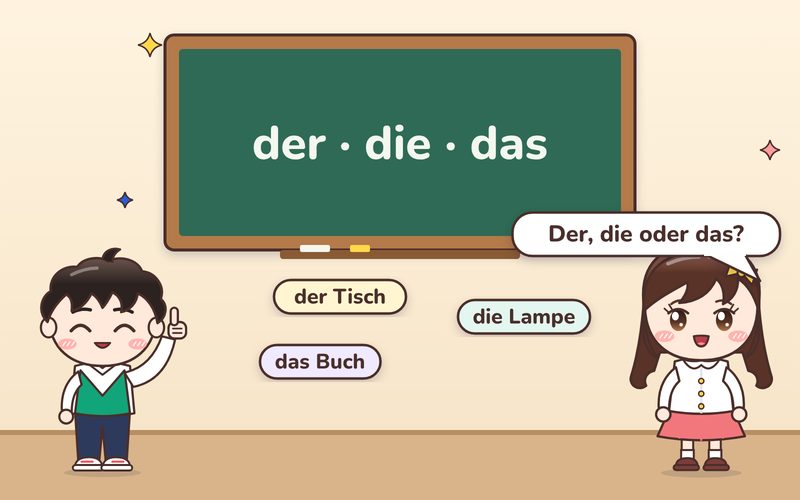
GrammarA1 der, die, das: how to guess a noun's genderEvery German noun is der, die or das. These endings and simple rules let you guess the right article much more often.